

Discover Pioneer Gardening Traditions in Springfield
Tended to by volunteers and overseen by The Ohio State University, Clark County’s Early Ohio Settlers Garden re-creates how those on the frontier grew plants.

One may easily miss the unassuming garden surrounded by a picket fence while strolling through the 83 acres at Snyder Park Gardens & Arboretum in Springfield, but these small plots offer insight into our shared history. A painted sign with the message “Thou Shalt Not Steal, As We Are Seed Savers” warns visitors as they pass through the gate of the Early Ohio Settlers Garden, an area within the arboretum that shows what the backyard gardens of Ohio’s pioneers looked like.
“It’s all done by hand, so [the volunteers] won’t use any modern technology,” says Pam Bennett, professor at Ohio State University and director of the Master Gardener volunteer program. “When they’re planting, everything is pretty much identical to what would have been done on Ohio prairies when settlers were coming in.”
The garden was first planted in 2008 at its former site at the Clark County Extension Office on Gateway Boulevard, before moving to its current location in 2014, where it is tended to by a group of volunteers from the Master Gardener program at Ohio State University.
The garden plots, which are separated into quadrants, have their own purposes. A medicinal herb plot holds plants like tansy, a flower that when dried and steeped can help reduce fever and headache.
Another corner of the garden has vegetables that would have been common in the early 19th century, like cow peas, calabash tomatoes and squash varieties. Crops like early wonder beets were especially favored because they could be jarred and stored for winter.
The dyer garden showcases plants settlers used to dye their garments, while the flower garden produces varieties that are attractive to both humans and pollinators.
On the first Saturday of August, Snyder Park holds an annual Garden Jubilee, where volunteers dressed in period clothing are on hand to demonstrate historic cooking and pickling processes, in addition to hosting hands-on programs during which participants can learn how to use various plants to color fabrics.
“The garden itself has a lot of meat behind it,” Bennett says, “because there’s education, there’s information and there’s connecting it back in history.”
1900 Park St., Springfield 45504, 937/398-7600, clark.osu.edu
For more Ohio history, sign up for our Ohio Magazine newsletters.
Ohio Magazine is available in a beautifully designed print issue that is published 7 times a year, along with Spring-Summer and Fall-Winter editions of LongWeekends magazine. Subscribe to Ohio Magazine and stay connected to beauty, adventure and fun across our state.
Related Articles

Living-History Performance Highlights ‘Frankenstein’ Author
The Rutherford B. Hayes Presidential Library & Museums in Fremont shares the story of Mary Shelley during this performance at the Hayes’ Victorian home. READ MORE >>

5 History-Focused Events This Month
Take a trip to the past at these Ohio gatherings, including an old-fashioned baseball match and a period-appropriate reenactment showcasing historic trades and crafts. READ MORE >>
How Ashtabula’s 1876 Train Disaster Changed American Railroads
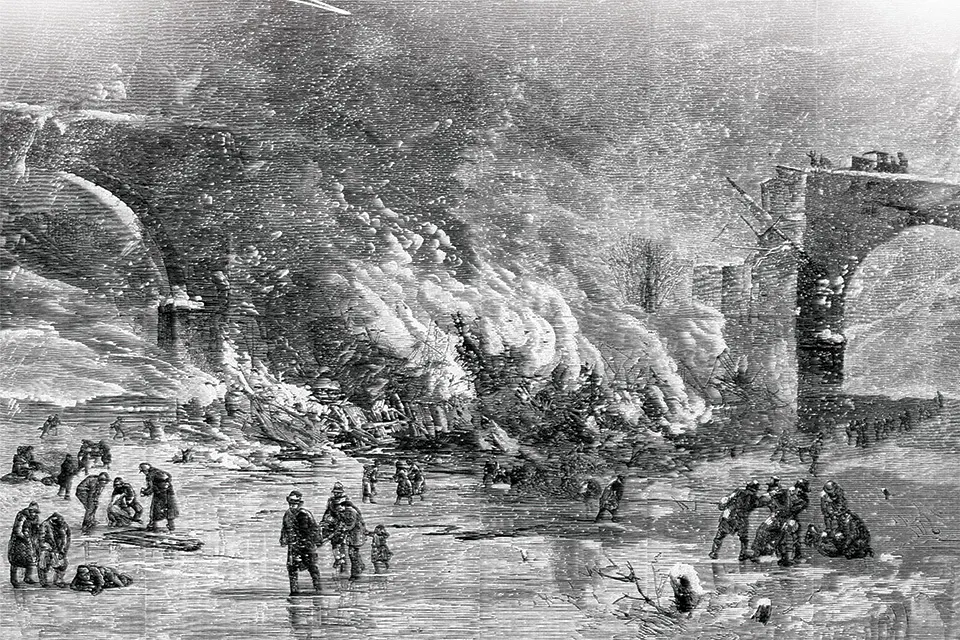
On Dec. 29, 1876, a passenger train plunged into the Ashtabula River, leaving tragedy, unanswered questions and lasting reforms in its aftermath. READ MORE >>