



October 2009 Issue
Life Over Easy
Laboring on one particular Sabbath in autumn wasn’t work, it was an act of love.

Some music makes a clumsy man think he can dance. Some women, when they come in a room, make a man want to stand up and remove his hat, even if he is not wearing one. Fall does that to me.
Summer in Ohio is like sipping warm butter through a curly straw. But in autumn the air goes crisp as a chilled apple, and magic happens. People who have not stirred since July get up and move. Some think of leaf-peeping and hay rides, but I dream of tape measures and tool boxes.
The connection was made long ago in a ritual somewhere between a baptism and a barn raising. Every Sunday throughout the year my family would gather at my grandmother’s house for dinner. In summer we ate outside on picnic tables, next to her vegetable garden. On the last blue-sky Sunday of the year, one of my uncles would push back from the table and say, “Well, let’s get Ma ready for winter.”
(I never understood how they picked that Sunday, and came to accept it as magic. It was understood that my aunts were spell-casters, and every small boy hiding a secret behind his back knows mothers can read minds. It only followed that their husbands would be wizards.)
Gemma Colino was a widow, a tough little Neapolitan. Her house was a tiny wood box, set in a row of identical boxes on a brick alley, but my grandmother’s was the prettiest, and I’m not just saying that. Gemma had four daughters, and her daughters had husbands, and not one lived more than a long mop handle away. Her house was a showplace — her children saw to that. Now they would make it winter-proof.
My Uncle Gene, a tall man, would look up and decide the gutters needed cleaning. My father, a short man, would peer under the porch eve and say it sure could use some paint. My Uncle Herb, just a good man, would run his hand through the grass and announce the lawn could stand one more cut. Uncle Ken would load a caulk gun, work boots peeking out from under his church pants.
My uncles were factory workers by trade, but self-taught experts at carpentry, plumbing and painting. They owned every Craftsman tool ever made, and traveled with a Sears store in their car trunks. (I believe they could have repaired a moon rocket, if one had fallen on us.) For them, calling a stranger in when something broke at home would have been like paying someone to dance with your wife.
Together they probably starved a phone book’s worth of contractors.
I cut the grass with a push mower bigger than I was, and if memory serves, mowed most of the known world those Sundays. Later I pruned Gemma’s garden by hand, because using a cutting tool would have been like taking a cleaver to a loved one complaining of appendicitis.
It was men-only work, which meant something to a small boy. The women stayed inside doing ... I wasn’t sure what. I was sent in once with a few tomatoes and saw stew pots bubbling like cauldrons, and my mother and her sisters proclaiming loudly in Italian. I ran.
A transistor radio played as we worked — the Cleveland Browns were always humbling somebody — and my uncles would tell stories as they poured turpentine from a silver can. As young men they had fought wars in the Pacific and Korea and seen just about the ugliest face this world can put on. But there was a gentleness to them you could almost feel.
Once I mentioned that we were not supposed to work on the Lord’s Day —that was catechism class talking — and my Uncle Gene smiled and said this wasn’t work. Then he asked me if that Jim Brown wasn’t something.
When we were done the house glowed.
The next Sunday — it would always be raining — we would eat in the warmth of Gemma’s kitchen, feasting on some of the stewed tomatoes and canned peppers my aunts had “put up” the Sunday before. Then the men, we men, would walk outside and admire our handiwork.
I wish I could remember more, but it is like trying to hug music.
I think of those Sundays now. I see a ladder propped against a barn or watch the last tractor crossing an October field, and know people still prepare for winter. When they are done, Ohio will glow.
I guess I am still under a spell, because every fall I believe I am a competent man. That notion could not have stuck any better if my uncles had nailed it in place.
I have helped everyone I know at least once, and my friends will say once is about enough. I did the measuring and sawing for a friend’s porch, and her steps, while solid, do list a little to port (I believe the earth must have settled). Walking out for the mail is like exiting the Titanic. Last fall I roofed another friend’s garage, and when his wife came out and saw me loading the nail gun she hurried inside to check her husband’s life insurance, I’m sure.
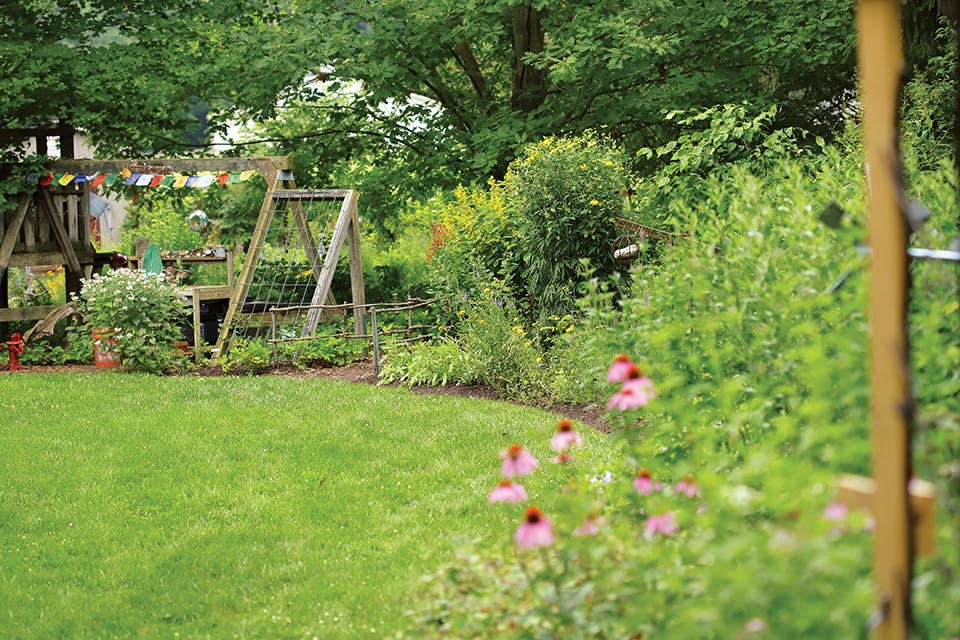
But what I miss is that last turn in a garden. My friends are too refined for much dirt, give or take a clay-pot geranium. Those with serious real estate hire people to do their yard work. To me, that’s like hiring somebody to pet your dog. Too bad: I am a weed-pulling fool.
I used to tell people I could not garden if my life depended on it. I think now maybe it does.
I live in a city apartment. But I have a window box. Folks pass by and grin at the two scrawny tomato plants. They do not know how lucky they are I was not raised by wheat farmers. In a day or two, on a perfect blue Sunday, I will bite into the last tomato, and taste everything but regret.
John Hyduk is a freelance writer based in Fairview Park.
Sunday, May 29, 2011 by Steve Yontez
I read this writer's article in Esquire recently and really enjoyed it. He has a knack for words and his writing evokes a lot of memories and laughs. He should create a book of his short stories. Keep on writing.