





Printer Friendly VersionEmail A FriendAdd ThisIncrease Text SizeDecrease Text Size
March 2009 Issue

Hope for the Hills

The new Hocking Hills Green Certified program helps keep the “green” in this favorite greenspace.
Hope for the Hills
Barb O’Conner and her husband John don’t consider themselves hard-core eco-travelers. “We don’t sleep in organic hemp tents or anything like that,” jokes Barb. When they plan a vacation, the Columbus couple prefers to patronize hotels and restaurants whose business practices mesh with their own green sensibilities. “We’ve been everywhere from Costa Rica to California, and it’s always been pretty easy to find hotels or tour groups that are at least trying to be environmentally conscious,” she says.

But when the couple sets their sights on destinations closer to home, Barb says it’s not always as simple. “We’ve found a few places that we know are pretty green, but most of that has come from word of mouth,” she says. “I think it’s still relatively hard to find these places, since not all of them advertise it or even have Web sites.”

The new Hocking Hills Green Certified program is aiming to change that — at least in the Hocking Hills region, where spectacular caves, waterfalls and other natural wonders draw millions of visitors annually. The new voluntary certification program, initially launched late last year at eight test sites, encourages local businesses to adopt and promote environmentally conscious practices — both internally and by educating the crowds that patronize them.

Businesses that choose to become green certified are identified on the new Web site www.hockinghillsgreen.com and earn the right to signs and logos alerting customers to their certified status. The payoff for participants, says Karen Raymore, executive director of the Hocking Hills Tourism Association, rests not only in protecting the local landscape, but also in attracting the growing number of travelers looking for “green” tourism opportunities in both senses of the word.

“In the Hocking Hills, the product that brings millions of visitors here each year is natural, and we had better protect it, because we can’t rebuild it,” says Raymore. “We also know that, for Americans, travel is a necessity for sanity,” she adds. “And consumers want to feel good about how they spend their money.”

Raymore says businesses can qualify for one of three levels of certification. Level one, the most basic, requires participation in practices such as an on-site recycling program, non-disruptive wildlife viewing and (for hotels and other lodgings) encouraging guests to save water by using their towels and linens more than once. Businesses can advance to higher levels by adding additional green practices, including composting, switching to compact fluorescent bulbs, landscaping with native plants, printing with soy ink and other environmentally conscious endeavors.

“First, we looked at what other areas [with successful green tourism initiatives] were doing,” Raymore says. “Our number-one objective was to meet the expectations of green travelers — no greenwashing,” she laughs, referencing a term commonly reserved for businesses more concerned with presenting the image of being green than doing something substantial. “But we wanted the program to be reasonable and affordable so that all of our businesses could be on board on some level.”

At Stuart’s Opera House in Nelsonville — one of the initial eight test sites for the program — this meant starting small and building on initiatives that were already in place. “Our patrons have always been people who are concerned with recycling, reducing and reusing,” says Adam Fisher, the opera house’s chief operating officer. “So even if we didn’t set out the proper recycling bins, people would line up their empty bottles and cans on the bar, and one of our guild members would take the recycling home in her car,” he says.

Volunteerism like this has helped the venue move in a greener direction on a limited budget. “Just recently, [the Stuart’s Opera House guild] helped us raise money to purchase recycling bins for inside,” he says. Fisher adds that they’re also trying to make business operations easier on the environment by recycling shredded and copier paper and switching to compact fluorescent light bulbs, as well as scheduling events in clusters so that heaters and air conditioners are used sparingly. “We try to consolidate the theater’s schedule of events so we don’t have gaps,” he says.

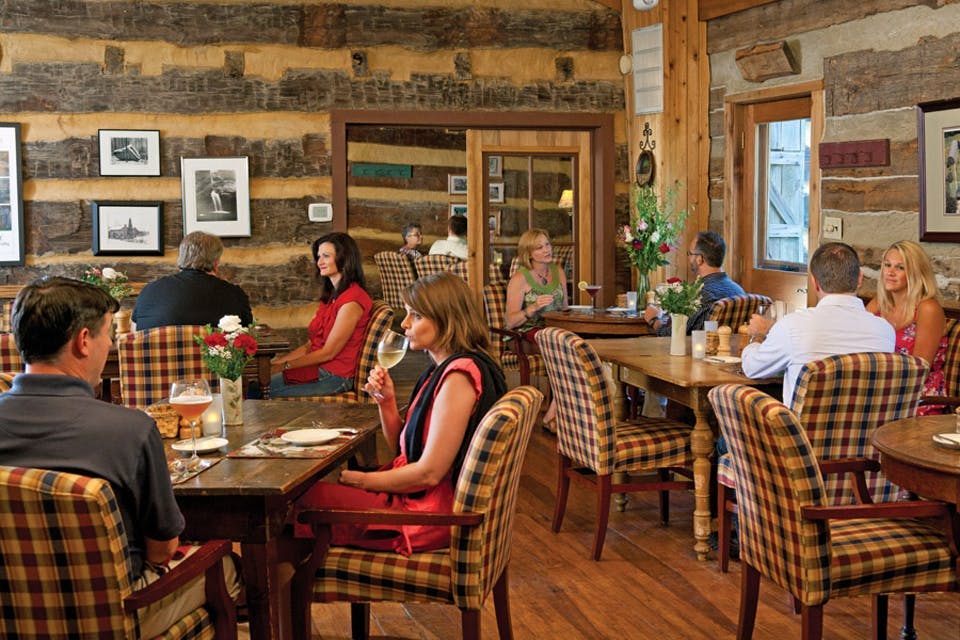
Innkeeper Ellen Grinsfelder was also quick to be on board with the region’s green initiatives. Her business, the Inn at Cedar Falls, has switched to low-flow showerheads and organic cotton sheets to make the popular B&B a greener place. Grinsfelder says saving energy was also part of the philosophy behind the property’s “new” structure, the Gathering Place. Opened at the beginning of this year, the meeting center/guest gathering room was constructed with logs salvaged from an 1800s cabin, with wood floors made from recycled pallets and carpeting made from recycled fibers.

“It’s about making gradual, sustainable changes that add up to be a good decision for your health and the environment,” says Gwen Corbett, whose business, Bear’s Den Cottages, was also among the eight test sites. Corbett, who writes a column for the Logan Daily News about green living and devotes time to educating about the importance of a green lifestyle, is as much a mentor as a participant in the program. Bear’s Den Cottages was operating at level three status long before the new initiative began. “When the cottage opened in 2000, it was the first green place in the Hocking Hills,” she says. The property’s commendable credentials — which include locally timbered and milled wood; natural/organic/biodegradable soaps, cleaning products and detergents; organic and fair trade coffee; and 100 percent recycled, soy ink brochures, to name a few — are listed on the Web site, www.bearsdencottages.com.

But educating businesses is just part of the equation, says Corbett. Helping travelers to understand their role in this effort is just as important. It’s a sentiment Pat Quackenbush, a naturalist for the Hocking Hills State Park, echoes.

“Plastic water bottles are our number-one trash items we get off the trails,” says Quackenbush. “The dumpsters are three-quarters full of them during the summer. Everyone knows about the waste and pollution problems they cause, and unlike revamping your home’s heating system, it’s such an easy thing to avoid.”

To cut back on the piles of plastic, Quackenbush says the parks are in the process of installing two water stations, one outside the visitor’s center and another at the park’s main office, which will offer purified water to encourage guests to bring their own reusable water bottles. The new stations will coincide with an effort to reduce the number of water bottles they sell in the state parks. “The water we’ll be offering will be cleaner and taste better than what you’re getting out of the bottles, anyway,” he says.

Minimizing trash isn’t the only way for travelers to stay green. “Stay on the trails,” says Quackenbush. “We put them where they are for a reason — to give you the best vantage point, to keep you safe and to keep the flora and fauna protected, too.

“Also, leave things where you found them,” he says. “We have between 3 and 4 million visitors each year — if everyone plucks a wildflower, well, you can imagine the impact.”

And like Fisher, Quackenbush is quick to include volunteerism as a way to get in touch with your earth-friendly side. “With the economy, our staffs are getting smaller and smaller. Volunteer. Whether it’s here or at your local park, after you spend a day working outside, you feel really good — I promise,” he laughs.


Tips for Treading Lightly

Gwen Corbett, the owner of Bear’s Den Cottages in Hocking Hills, writes a column on green living for the Logan Daily News.

Here, the lifelong environmentalist shares her common-sense tips for being a greener traveler.
  • Conserve utilities. Turn off the lights and TV when they are not in use.
  • Be frugal and waste less. Be mindful of the amount of toiletries, dish detergents and other supplies you use. Take home unused portions of open toiletry items, since they will be thrown away.
  • Recycle. Ask your hosts if they recycle. If they do not, ask if there is a drop-off station near the lodging facility or (if you’re driving) consider taking the recycling home.
  • Bring reusable water containers and coffee mugs for each member of your group. Not only will you reduce toxic plastic waste and the amount of Styrofoam/cardboard going to a landfill, but you’ll save money, too.
  • Dine and shop locally. Ask for locally grown or raised (preferably organic) food and beverages, and look for locally owned stores that sell artwork and items that are sustainably made from local materials.
  • Support the fair trade movement. Buying fair trade items like coffee, tea and furniture supports respect for workers’ rights and the environment.
  • Plan your driving trip, use mass transit and/or walk. Mapping out your route ahead of time cuts down on the amount of gas used and reduces CO2 emissions.
  • Visit natural areas. The move from rural/farm living to urban/suburban living has reduced our connection to the natural world. Visiting places such as preserves, sanctuaries and parks helps us to reconnect with nature and our responsibility to protect it.
  • Visit local cultural/historical sites and museums. Learning about the people and history of an area encourages respect and preservation.
  • Plant a green seed. Asking for recycling programs and local, organic, sustainably made and/or fair trade products makes your consumer voice heard and encourages businesses to respond.
 
Related Categories


Subscribe
COMMENTS
Be the first to leave a comment.
ADD YOUR COMMENT


Subscribe
Ohio-Magazine-Cover

Subscribe to
Ohio Magazine
two ways:

Newsletter
FacebookFlickrOhioBlogsTwitter Podcasts

Yesterday Once More

Last night was a trip. I attended the opening of "Hair," the American Tribal Love Rock Musical taking center stage at the Palace Theatre in downtown Cleveland through January 29. As I sat in an audience filled primarily with fellow boomers, it didn't take long for the show to become a colorful sojourn back to my youth. When "Hair" debuted on Broadway in 1968, it radiated a spirit that clearly defined us, the children of the '60s. The litany of songs from the show we fervently memorized back then ("Aquari... Read More »

Older Posts »

Copyright © 2011 Ohio Magazine All rights reserved. | webmaster@ohiomagazine.com
1422 Euclid Avenue Ste. 730 Cleveland OH 44115