

Printer Friendly VersionEmail A FriendAdd ThisIncrease Text SizeDecrease Text Size
September 2010 Issue

At Home in the Country

Former Cleveland Mayor Michael White is living his dream, raising alpacas and operating a vineyard and winery in
east-central Ohio.
Jan Myers

Michael White tends to Seven Pines Farm's alpacas.

Thom Sivo

trav1_romantic_article1_th

Thom Sivo

trav1_romantic_article1_lrg trav1_romantic_article1_th

Michael White examines grapevines.

Thom Sivo

trav1_romantic_article1_lrg trav1_romantic_article1_th

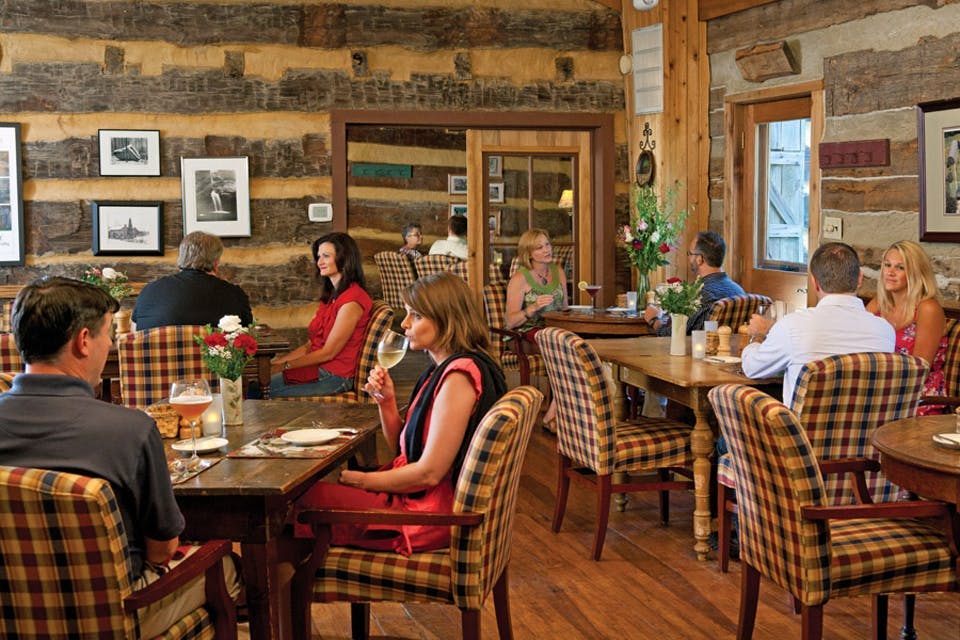
Yellow Butterfly Winery's tasting room is located in an 88-year-old bank barn.

Thom Sivo

trav1_romantic_article1_lrg trav1_romantic_article1_th

Yellow Butterfly Winery offers eight wine varieties in the pastoral setting of east-central Ohio.

Thom Sivo

trav1_romantic_article1_lrg trav1_romantic_article1_th
"Most people who think they know me may not know the real me," says Michael White. “Half of me had always wanted to be in politics and the other half wanted to be involved in agriculture,” says White, 59, who was mayor of Cleveland from 1990 to 2002.

White and his wife, JoAnn, now live on a farm in Newcomerstown, Ohio, near the Tuscarawas and Coshocton County border. JoAnn, who served as Lakewood City Council president from 1990 to 1997, says the move to the farm was a natural progression for them. “We both were lifelong Cleveland residents and had been deeply involved in the community,” she says. “When Michael decided not to run for office again, we knew we had the opportunity to do something different with our lives.”

When he was 13, White got his first job, working in the Cleveland Public Schools’ summer gardening programs for youth. “I eventually studied agriculture at Ohio State University,” says White, who also served as president of the OSU student body. “I had a hard time, though, coming from the city of Cleveland, because the other students in my classes had grown up on farms.”

White explains that Carl B. Stokes, the first African American mayor of Cleveland (from 1967 to 1971) was a huge
influence on him. “Ever since I was age 13, I had a dream to become the mayor of Cleveland,” he says.

This dream became a reality, but he held on to his other love as well. “I had a garden every year I was in office,” he says. “I was such a gardening addict that I even had a streetlight installed over my lot so I could garden when I got home — sometimes still in my suit and tie. I gave most of my harvest to my staff, and they loved it. That was half the joy of gardening for me — giving it away.”

Seven Pines Farm

In the late 1990s, Michael and JoAnn began looking for property so he could begin to fulfill his farming dream. They knew they wanted three to five acres of land that was not visible from the road, and within an hour of Cleveland.

“In all honesty, the land found us,” Michael says. “We had been looking for eight or nine months. Then one day, a gentleman called who had heard I was looking for land. His property had only one of our three criteria — it wasn’t visible from the road. It was more acreage that we wanted and it was two and a half hours from Cleveland, but JoAnn wanted to see it anyway. We loved it, bought it and eventually built a small house to stay there on the weekends.”

They named their place Seven Pines Farm and moved there full-time in 2002. The Whites knew they wanted to raise something on their farm, and looked into various options. “We had decided that we didn’t want to raise any animals that we had to kill,” Michael says. 

They looked into growing mushrooms, hydroponic tomatoes, and even worm farming. “Then Michael read an article in Continental, the in-flight magazine for Continental Airlines, about an alpaca farm,” JoAnn recalls. “That’s when we started looking into alpacas. We visited farms throughout Ohio and surrounding states for about a year and a half.”

They started Seven Pines Alpacas with 17 animals. It’s a full-service alpaca farm, which means they handle the birthing, breeding, boarding and selling. Currently they have 25 alpacas. “Alpacas are pretty adorable, alluring and content animals, so they are the perfect choice for us,” Michael says.

They also began a horse-rescue foundation at the farm after they learned of the abuse and abandonment of horses. “This is something we do for God,” says Michael. “We’ve had about 25 horses come through our rescue facility so far, both short-term and long-term stays. We are able to rehabilitate and find homes for most of them.”

JoAnn explains that since she and Michael are both very strong personalities, they had to divide the leadership responsibilities at the farm. “I took the lead with the horse-rescue project and he took the lead with the alpacas,” she says.

Yellow Butterfly Winery
Michael also had an interest in learning to make wine, so he took classes and began making wine for family and alpaca farm customers. He and JoAnn decided to look for additional property near their farm to establish a winery. “It turned out that we were able to purchase the farm next to ours in 2009,” Michael says. “That farm had an 88-year-old bank barn on it that had been used for cattle and hay. We had the barn restored and it now houses Yellow Butterfly Winery’s tasting bar, seating, gift shop, restrooms and room for private parties. The rehabilitation of this old barn has truly been a labor of love.”

The winery opened this past June. The couple and a group of friends planted 270 Traminette and Vidal vines, with more vines going in this spring. Yellow Butterfly Winery currently offers eight wine varieties. They added a large multi-level deck to the back of the barn with additional seating where visitors can relax and enjoy the serene rolling hills and alpacas grazing nearby.

“To see our guests sitting here enjoying it — that’s what the winery business is all about,” Michael adds.

“Michael is a builder and a lifelong learner,” adds JoAnn. “He had his heart set on building a winery and expressed a keen desire to do this. We feel Yellow Butterfly Winery is a complimentary business to some of our long-term goals and are so happy with the positive response we’ve been receiving from visitors.”

Daily Life
A typical day for Michael White now is quite different from when he was serving the City of Cleveland. He begins around 5:30 or 6 a.m. at the computer, checking on business matters. Then it’s off to care for the alpacas and the horses.

Once the chores are done, he turns his attention to the Yellow Butterfly, talking with guests and serving wine at the tasting bar. In the evening, he heads back to the alpaca and horse barns. The Whites also have a grounds superintendent, Rick Lindsay, who assists with the farm chores and helps Michael with the winemaking process.

“I think this is where I was meant to be,” says Michael of his east-central Ohio farm. “Cleveland is my hometown, but this is home now. We have wonderful neighbors here and we couldn’t have done this without their support. We are truly grateful for the assistance of Lee and Joy Wyse of nearby Rainbow Hills Winery who helped us get Yellow Butterfly started.”

Michael White feels fortunate to have been able to do the two things he had always envisioned for his life.  He lived his political dream. Now he is living his agricultural dream.

“I have been blessed to get to do what I truly enjoy every day,” he says. “I never take it for granted.”

When You Go ...

Yellow Butterfly Winery
is located at 11661 Blue Ridge Rd., Newcomerstown 43832. Hours through September are Monday through Thursday, noon–6 p.m., and Friday and Saturday, noon–8:30 p.m. Country-style meals are offered on Friday and Saturday. Reservations are requested for dinner; call the winery by Tuesday for weekend meal reservations. For fall/winter hours, directions and additional information, visit the website at yellowbutterflywinery.com or call 740/492-1216. 
Related Categories
- Life


Related Articles


Subscribe
COMMENTS
Sunday, January 09, 2011 by francel and larry bellinger
Hi Michael and JoAnn,
The Winery looks great and we can't wait to visit it. It's been a long time since you have heard from us, but your names come up in our conversations at least two to three times a week. We are still moving in the Alpaca direction and definitely intend to do that through you, if we can get all of the balls to fall into place at the right time. Talk to you soon.
ADD YOUR COMMENT


Copyright © 2013 Ohio Magazine All rights reserved. | webmaster@ohiomagazine.com
1422 Euclid Avenue Ste. 730 Cleveland OH 44115