

July 2005 Issue
Warm Welcome
Ohio's Appalachian counties want visitors to enjoy the unique culture of this diverse, history-steeped region.
Betsa Marsh
The twang of dulcimer strings. The twirl of Amish peanut butter. The balancing act that is the rim hike around Conkle's Hollow gorge. Ohio's Appalachian crescent takes travelers on a full-sensory journey through a special culture.
Twenty-nine counties form the state's Appalachian region, a scythe blade through Ohio's southern and eastern reaches, from Columbiana County in the north to Lawrence County in the south, from historic Washington County in the west to greater Cincinnati's Clermont County in the east. The Appalachian Mountains, rounded off by eons of weathering, shelter farms, hamlets and sizeable cities within their tree-topped embrace.
There is a different rhythm to life here, whether it's planting and harvesting, or merely following the seasons more closely than city cousins. It's summer, so let's have corn on the cob, tomatoes and strawberry shortcake. It's fall, so bring on the cider and pumpkin pie.
Travelers can sense the change as soon as they spot the perfect hand-stitched quilt, settle in for fried chicken and mashed potatoes, or check into their rustic B&B for the night. Big-city frenzy can be jettisoned at the Appalachian border.
"It's Southern hospitality, only better," figures Paul Harper, director of development for Hocking College in Nelsonville. "Better because it's closer."
A life-long resident of Ohio's and West Virginia's Appalachia, Harper earned his second master's degree at Ohio University, left, and then did "the Athens boomerang" -- returning to the region for good in 1993. He now occasionally sees Appalachia through outsiders' eyes.
"I have a friend from upstate New York who moved here, and one of her first comments was 'People wave.' She was amazed. They wave if you pass them in your car, and they talk to you when they meet you. She tried it in New York and they thought she was crazy.
"We're different from the rest of Ohio, too. Culturally, the pace is a little slower."
It's a tempo that gets in the bloodstream. "You hear my twang?" Wendy Waite asks over the phone from her base in Morgan County's tiny Stockport. Waite, a transplant from West Chicago, says, "I came here when I was 10, and after six weeks, I went back to Chicago and my friends made fun of the way I talked."
She returned to rural Appalachia, "where families take care of families," and eventually fell in love -- with the mighty Muskingum River. After 11 years as a lock tender and naturalist for the Ohio Department of Natural Resources, she formed her own Elk Eye Tour Company (www.elkeye.com), specializing in river lore.
"The Muskingum has America's oldest lock and dam system on a river, built between 1836 and 1841. It's still operated by hand for boat traffic, and it's the last system we know of like it in the country. The river is a National Civil Engineering Historic Landmark, just like the Golden Gate Bridge, Empire State Building and Hoover Dam, but it's not widely known."
Enter her Elk Eye Company, the translation of the Delaware Indian name for Muskingum. On her tours, Waite introduces visitors to the early lifeline of Appalachian Ohio, a river that forms from the Tuscarawas and Walhonding Rivers at Coshocton and flows through Zanesville to the Ohio River at Marietta.
It's a scenic history lesson, from the Shawnee who used the river for their main transportation to the first European settlers who came ashore in the Northwest Territory at Marietta. Rufus Putnam led the Ohio Company of Associates from New England to Marietta in 1788, and his tiny log cabin is still tucked inside the city's Campus Martius Museum.
Revolutionary War veterans soon followed, clearing the land they'd been paid for their military services. Raising crops and livestock, they shipped their goods by flatboat to New Orleans, then walked home.
"It was flatboats until the arrival of the steam packet boats, but the Muskingum was real shallow," Waite says. "They had to build dams to make the river deep enough for the packets, and they needed locks to get around the dams."
The lock-and-dam system fueled an industrial revolution along the river, with 13 mills north of Marietta churning out wool, chairs and flour for Europe. Europe, in turn, sent more immigrants.
"The Germans, Irish and English came to build the river system -- the Turks built the dam at Beverly," Waite says. "This area was a big melting pot.
"The mishmash of different cultures is why we have great folk music, a lot of bluegrass, gospel and country," says Waite, who wouldn't miss the Ohio Valley Opry the third Saturday of the month at McConnelsville's restored opera house. "They pack the house."
Understanding those early migration patterns, as well as the waves of Eastern Europeans, Southern African-Americans and Amish farmers who came later, is key to appreciating the distinctness of Appalachian Ohio. All of white European Ohio came from elsewhere, of course, but this crescent is different from the New Englanders who settled Cleveland's Western Reserve, for instance, or the English and then Germans who shaped Cincinnati.
"The area's great asset is the people who live here," Harper says. "Expect friendly, hospitable folks."
These Appalachian ambassadors will be greeting travelers all summer in the region's forests, parks and art galleries, and hosting dozens of festivals honoring everything from pig iron to chili peppers. Here's just a sampler of some of Appalachia's distinctive sights and celebrations. (For more information on attractions and events, contact the respective visitors bureaus listed after each region.)
EASTERN REGION
(Carroll, Columbiana, Coshocton, Guernsey, Harrison, Holmes, Jefferson, Muskingum and Tuscarawas counties)
There's no need to wait by the mailbox for an engraved invitation -- that's not the Amish way. But you're most kindly welcome to an Amish Wedding Feast at the Dutch Harvest Restaurant in Holmes County's Berlin, center of the world's largest Amish settlement.
Two unsuspecting guests will be plucked from the audience to become the ersatz bride and groom, but the true Amish experience of childhood, courtship, first love and church membership will be shared by the Amish themselves. The feast, with meatloaf, chicken, mashed potatoes, noodles, wedding cake and date pudding, is as Amish as it comes. The nuptials will be July 14 and 30, as well as August 6 and 20.
The Amish-Mennonite experience continues at the Mennonite Information Center near Berlin, with Behalt, its cycloramic mural. This summer, the center is adding a one-room schoolhouse and Conestoga wagon.
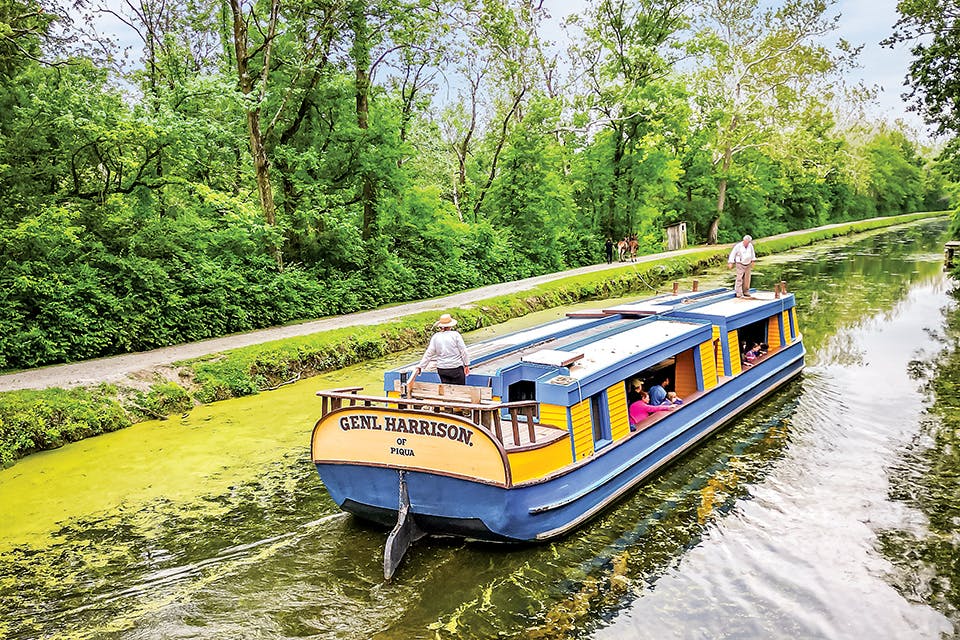
Next door in Coshocton County, Roscoe Village tells the hard-digging tale of Ohio's canals and the immigrants who built them. The restored 1830s town is one of only three places in Ohio where you can cruise on a remnant of the original canal system.
Abraham Lincoln himself, channeled through a modern portrayer, will visit Roscoe Village July 16-17 for a Civil War re-enactment. Later in the summer, on August 20-21, the village will commemorate the 175th anniversary of the arrival of the first canal boat, the Monticello, at Port Roscoe on Aug. 21, 1830.
History, and the creative ways residents share it, is one of the biggest draws in the Eastern Appalachian region.
The Utopian experiment at Zoar Village, with its cluster of original buildings, will be a natural backdrop for a harvest festival August 6-7 and a Civil War Encampment August 17-18.
Steubenville and Jefferson County will spotlight the area's Quaker heritage with a special weekend August 6-7 at Mount Pleasant. Six historic buildings will be open, including the 1814 Friends Yearly Meeting House. The route will weave through gardens and private homes, some of which were used in the Underground Railroad to help runaway slaves.
In Guernsey County, it's historic wheels that will take center stage during the Cambridge Classic Cruise-In August 20. In late summer, voices will rev up for the Fall Gospel Sing at Spring Valley Campground, September 15-17 and 20-24. The season will wrap up September 30-October 1 with the Heritage Festival in Historic Downtown Cambridge, celebrating the city's location on the National Road and its role as the "Crossroads of America."
Next door, Harrison County will re-create vintage farm life during the 43rd annual Steam Thresher Reunion and Show September 10-11 on St. Rte. 519 west of New Athens. Carroll County will add its own "putt-putt" melodies of steam engines during its Power Show and Tractor Pull in Mechanicstown August 26-28.
Malvern will convene the Great Trail Festival, Ohio's largest event focusing on the French-and-Indian era, during two weekends, August 27-28 and September 3-5.
Zanesville, in Muskingum County, was once the "Pottery Capital of the World," and that legacy will be feted during Pottery Lover's Week July 9-17. The week envelops a range of specialty pottery sessions, auctions and the tempting Taste of Zanesville.
Cambridge/Guernsey County VCB, 800/933-5480, www.visitguernseycounty.com
Carroll County CVB, 877/727-0103, www.carrollcountyohio.com
Columbiana County Visitors Bureau, 330/424-9078
Coshocton County CVB, 800/338-4724, www.visitcoshocton.com
Harrison County Community Improvement Corp., 740/942-2027, www.harrisoncountyohio.org
Holmes County Tourism Bureau, 330/674-3975, www.holmescountychamber.com
Steubenville CVB/Jefferson County, 800/510-4442, www.steubenvilleoh.com
Tuscarawas County CVB, 800/527-3387, www.neohiotravel.com
Zanesville/Muskingum County CVB, 800/743-2303, www.visitzanesville.com
CENTRAL REGION
(Athens, Belmont, Hocking, Meigs, Monroe, Morgan, Noble, Perry and Washington counties)
Athens and Marietta, as the two largest cities, anchor this part of Ohio's Appalachia, and many of the museums and galleries circle in their orbits. But a world of natural wonder is just across their thresholds.
The Appalachian hardwood forest is rich with oak, hickory, beech, poplar, maple, locust and black cherry trees. Much of the original stand was cut after the Civil War and the land strip-mined, but by the '20s, new growth was outpacing harvest.
Wayne National Forest sweeps through much of Perry and Athens Counties into Washington County, with Burr Oak State Park on the border and Zaleski State Forest just outside. These are grand places to discover the natural resurgence.
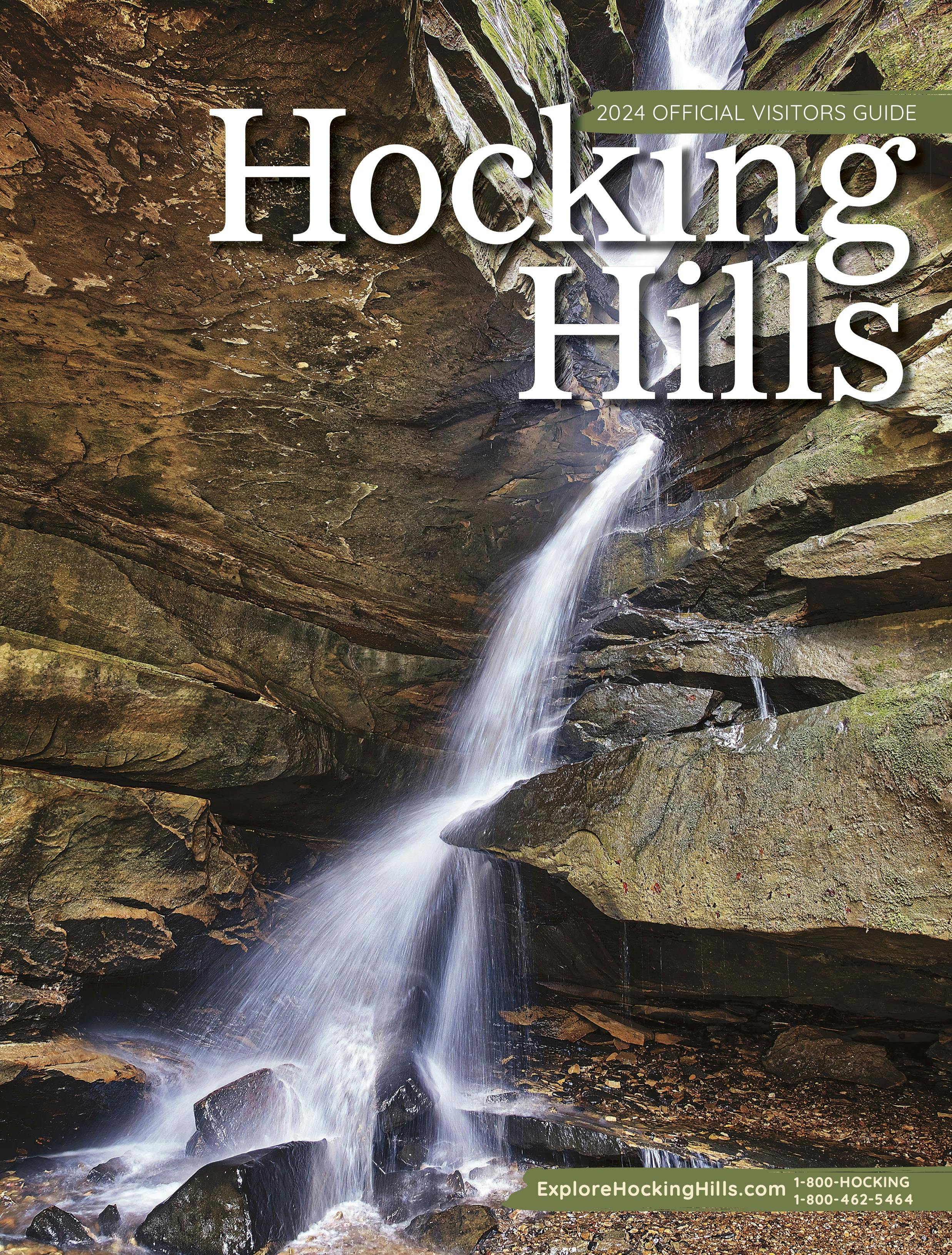
Hocking Hills, with its dramatic rock formations and surprisingly Alpine vegetation, is the largest outdoor attraction in the area.
"The Hocking Hills is No. 3 in number of visitors in the state, after Cedar Point and Kings Island," boasts Harper of Nelsonville's Hocking College.
Hikers come to explore Old Man's Cave, balance around the gorge rim of Conkle's Hollow State Nature Preserve and feel the cooling splash of Cedar Falls.
It will be even cooler for the Torchlight Tours of the Hocking River, July 3, 16 and August 13, and the Full Moon Romantic Canoe Trips, July 23 and August 20.
At Lake Hope State Park, travelers have a remarkable opportunity to feed ruby-throated hummingbirds -- by hand. Each Wednesday and Saturday afternoon at 2 p.m. now through Labor Day, naturalist Dave Sapienza will teach visitors how to offer the tiny birds sugar water from plastic floral tubes. Standing totally still is the hardest part of the training.
Nearby in New Plymouth, Ledora Ousley combines a popular game with her sandwiches. At Etta's Lunchbox Cafe & General Store, she has ringed the walls with old lunchboxes. Pick out your childhood tote and she'll tell you your age. All over a Hobo Ham Steak, a fried-bologna sandwich with sauteed onions.
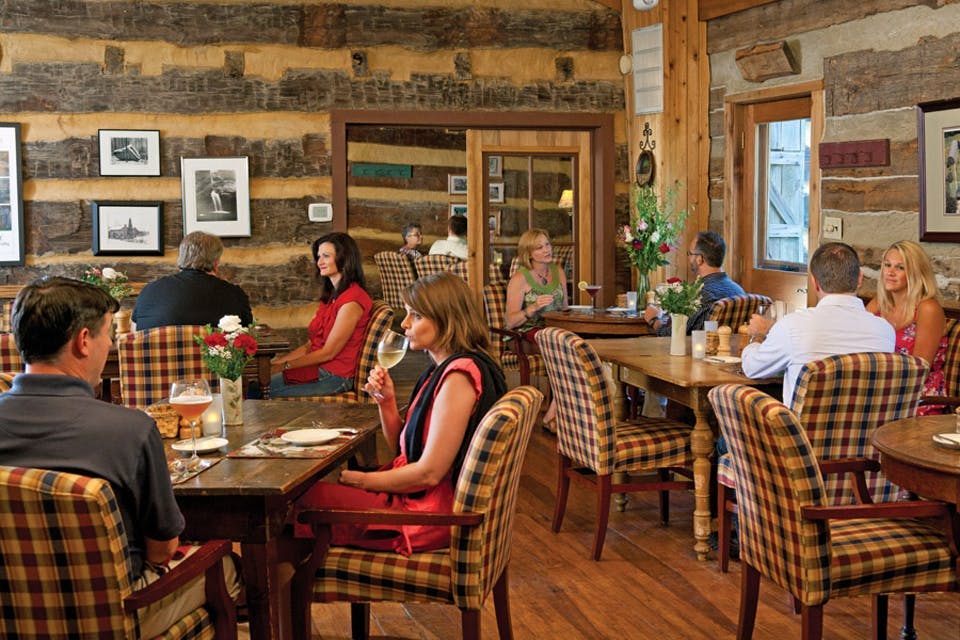
Northwest in Athens County, Nelsonville has reinvented itself as a regional art center. The town's Public Square rocks every Final Friday evening of the month, with music, food and gallery and studio doors wide open so travelers can kibitz over the artists' shoulders. Book ahead for the acts playing Stuart's Opera House and a meal at Rhapsody restaurant, the gourmet learning lab for the Hocking College culinary arts program.
The concept of gourmet meals on Nelsonville Square shows how the city has changed since the Hocking Valley coal boom of 1870-1925.
"At the turn of the last century, Nelsonville was the central point for transportation -- it shipped out a million dollars of coal a day from its station in 1910," Harper says. "Nelsonville was the hub, with spokes out to the little towns. A lot of those don't exist anymore."
Rather than fade into myth, some of the coal towns banded together in a nonprofit group, Little Cities of Black Diamonds Council. Now, they lead tours throughout the region. Some travelers want to come along on make-and-take trips, learning to hand-build primitive pottery or make a tile in the local starbrick pattern. Others, armed with work boots and gloves, want to go along to Wulf Reinicke's farm and help him harvest a tree on the Forest to Furniture tour.
Athens, too, is part of this heritage, now with dozens of galleries and workshops. Its world-famous Quilt National '05, an international juried competition for contemporary quilts, is on the walls at the Dairy Barn Cultural Arts Center until September 5.
This year, Athens will throw the first Jazz & Rib Fest: Boogie on the Bricks, on July 23. Things will get even spicier at the Ohio Chile Pepper Festival August 4-7 in Glouster. Salsa vendors will show off their best, and the bravest will try the hot pepper-eating contest.
North in the heart of Belmont County, Bethesda will recall the heyday of the Chautauqua summer gatherings with its Chautauqua Homecoming Days July 9-10, centered on some of the original 19th-century cottages.
East in Blaine, the town will puff out its chest in pride September 18 for the dedication of the 1828 Blaine Hill Bridge, Ohio's first. The triple-arch span was part of the National Road, America's first interstate highway, and now Ohio's official bicentennial bridge.
Athens County CVB, 800/878-9767, www.athensohio.com
Belmont County Tourism Council, 800/356-5082, www.belmontcountytourism.org
Hocking Hills Tourism Association, 800/462-5464, www.1800hocking.com
Marietta/Washington County CVB, 800/288-2577, www.mariettaohio.org
Meigs County Tourist Association, 877/634-4726, www.meigscountytourism.com
Monroe County Tourism Office, www.monroecountyohio.net
Morgan County Chamber of Commerce, 740/962-3200, www.morgancounty.org
Noble County Tourism, www.noblecountyohio.com
Perry County Chamber of Commerce, 740/342-3547, www.perrycountyohiocofc.com
WESTERN REGION
(Adams, Brown, Clermont, Gallia, Highland, Jackson, Lawrence, Pike, Ross, Scioto and Vinton counties)
Many of the treasures in this part of Ohio's Appalachia go back much further than the National Road, statehood, and white settlement. Scholars are still trying to understand the mysteries of the prehistoric peoples who put such extraordinary effort into their monuments here.
Serpent Mound in Adams County is the largest prehistoric serpent effigy, nearly a quarter-mile long. Visitors can walk along a footpath surrounding the burial mound and wonder at its distinctive form: Is that an egg in its mouth? What is the symbolism?
Northeast in Chillicothe, the Hopewell Culture National Historic Park helps describe Hopewell life, 200 B.C. to 500 A.D., and the geometric earthworks and massive mounds they left behind.
Chillicothe also tells the tale of Tecumseh, the Shawnee leader who tried to save his sacred lands in the late 1700s. The outdoor drama at Sugarloaf Mountain Amphitheatre, with a script by Emmy winner Allan W. Eckert and a Native American score recorded by the London Symphony Orchestra, has amazed two generations of audiences.
Tecumseh and his men could not stop the waves of settlers, who found coal, iron ore, clay and oil in these mountains. They built the furnaces, mines and railroads left behind today.
Jackson County will celebrate the role of iron in its development with Pig Iron Day August 6 in Jackson, and Wellston will hold its Coal Festival September 6-10. Pike County remembers the iron horse that carried the iron and coal away with Railroad Days on July 16.
After the hard use much of Appalachian land has had, Ohio State Nature Preserves are working to save some of it in a more natural condition.
The Highlands Nature Sanctuary in Highland County is the first preservation reserve in the Arc of Appalachia, a 90-mile crescent where the foothills meet the western glaciated plains of southern Ohio. The Highlands portion in the Rocky Fork Gorge is alive with wildflowers and waterfalls against dolomite cliffs. The sanctuary, created in 1995, is open free to the public the first Sunday of the month from March to November, but travelers must call (937/365-1935) for reservations
This rural part of the state is perfect for weekend wandering, and Vinton County's Historical and Genealogical Society can steer you in the right direction to its five historic wooden covered bridges. The oldest is Arbaugh Bridge, which dates to 1871.
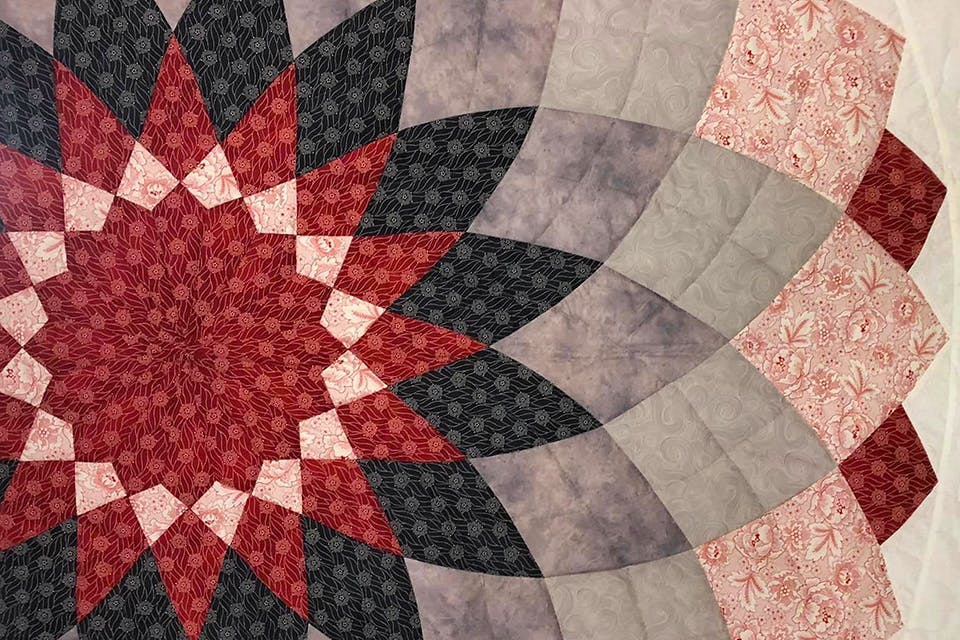
In Adams County, Donna Sue Groves started a vivid tradition that delights drivers. She painted a large quilt design on a barn to honor her mother's hobby, and now there are more than 20 quilt-square barns to discover along the country roads. The quilt idea has spread to Athens County, too, with contemporary designs.
There's a lot of history to take in exploring Ohio's Western Appalachia, and it never hurts to have a little help. That help is at hand in Portsmouth, but it's definitely not little.
From the Mound Builders to the Portsmouth Motorcycle Club, muralist Robert Dafford has encapsulated 2,000 years of history in 2,000 feet -- of Ohio River floodwall.
In the painted scenes, a Shawnee village shivers under a snowfall, stagecoaches arrive and workers build the Ohio & Erie Canal. Laborers tend an iron furnace and pour steel. Olympian Jim Thorpe stands proudly with the Portsmouth Shoe-Steels football team of 1927, and another native son, Hollywood cowboy Roy Rogers, rears back on his horse Trigger.
One of the last panels along the great expanse is a glittery twilight scene over the Ohio. At any point along the river, from East Liverpool to Point Pleasant, that vista may be the best Appalachian finale.
Adams County Travel and Visitors Bureau, 877/232-6764, www.adamscountytravel.org
Brown County Tourism, 937/378-1970, www.county.brown.oh.us
Clermont County CVB, 877/253-7666, www.visitclermontohio.com
Gallia County CVB, 800/765-6482, www.visitgallia.com
Highland County CVB, 937/393-4883, www.highlandcounty.com
Jackson Area Chamber of Commerce, 740/286-2722, www.jacksoncountyohio.org
Lawrence County CVB, 740/377-4550, www.lawrencecountyohio.org
Pike County CVB, 740/947-9650, www.piketravel.com
Portsmouth (Scioto County) Area CVB, 800/648-2574, www.portsmouthcvb.org
Ross-Chillicothe CVB, 800/413-4118, www.visithistory.com
Vinton County Chamber of Commerce, 740/596-5033, www.vintoncounty.com
Be the first to leave a comment.