






Printer Friendly VersionEmail A FriendAdd ThisIncrease Text SizeDecrease Text Size
August 2007 Issue

Routes to History

Take an Ohio road trip to discover our state's colorful past.

Heritage is defined as the culture, traditions, background and customs that make up an area's past. Ohio has a diverse and far-reaching heritage that has not only impacted the people who live in the state, but the rest of the nation as well. From early prehistoric times to the days of the frontier and the rise of industrialism, Ohio has had a major role in the shaping of our nation.

In the following pages, we take a closer look at seven designated heritage areas in the state and extract some of the historical gems worth visiting. Best of all, most of these attractions won't empty your wallet — and many of them are free. So pack up the car and hit the road to see for yourself why these Ohio heritage areas are so special.
 
Lake Erie Coastal

Americans love their coastlines, and the shores of Lake Erie are no exception. That's a good enough reason to escape to the beaches, nature preserves, lighthouses and heritage museums that characterize northern Ohio. And while you're there, check out the big cities and small towns in this part of the state.

Start things off in Ashtabula at the Finnish American Cultural Center, housed in a 44-by-28-foot log structure built on the former site of Sovinto Hall at Ashtabula Harbor, once a cultural and recreational center for first- and second-generation Finns. At the turn of the century, there were about 4,000 Finns living in Ashtabula, and this center celebrates their heritage. 1330 West 8th St. and Joseph Avenue, Ashtabula, 440/964-5790. Fri.-Sun. 1-5 p.m. Donations accepted.

Drive westward to Kirtland Hills and the Lake County Historical Society Museum. This turn-of-the-century summer estate is now a museum, Ohio frontier settlement and re-created Native American village. This summer, the museum is hosting a Lake County Treasure Hunt, a pirate-themed exhibit and real-life treasure hunt (with prizes for kids) around Lake County. Also see one of the largest collections of turn-of-the-century music boxes from the Musical Box Society International. 8610 Mentor Rd., Kirtland Hills, 440/255-8979. Tues.-Fri. 10 a.m.-5 p.m., Sat. 1-4 p.m. Admission $3, children $1.

Continue traveling west to Cleveland and the Dunham Tavern Museum, the oldest building still standing on its original site in the city of Cleveland. Built in 1824, this was the home of Rufus and Jane Pratt Dunham, a young couple from Massachusetts. The house was once located on a well-traveled stagecoach route, so Rufus was both a tavern keeper and a farmer. Today, it is on the Register of National Historic Places and presents a picture of what life was like for people who settled in the Western Reserve. 6709 Euclid Ave., Cleveland, 216/431-1060. Wed. and Sun. 1-4 p.m. Admission $3, children 3-12 $2, children under 3 free.

Farther west near Sandusky is the East Sandusky Bay Water Trail, a new, 15-mile water route for small boats such as kayaks, canoes, day sailers and rowboats. This is a terrific opportunity to enjoy the scenic views and cultural history from a unique vantage point. It's also a great option for people who want to take advantage of the many recreational waterfront opportunities in and around Sandusky Bay and Lake Erie. Erie MetroParks, 3910 Perkins Ave., Huron, 419/625-7783. Dawn-dusk.

Board a ferry to Put-in-Bay to see the South Bass Island Lighthouse, just recently opened for tours. Owned by the Ohio State University, tours of the house, lantern and grounds run through August 19, but the grounds will remain open after that date. On the National Register of Historic Places since 1990, the lighthouse also serves as a meeting place, laboratory, meteorological station and faculty housing. While you're there, consider a similar tour of nearby Gibraltar Island. 2360 Langram Rd., Put-in-Bay, 419/285-1800. Daily except Tues. 11 a.m.-4 p.m. Admission 12 and older $4, ages 6-11 $2, children under 6 free.

Finally, the Ottawa National Wildlife Refuge in Oak Harbor, known best as a migratory bird stopover refuge, just opened its new Visitors Center in May. The  center includes migratory bird exhibits, a muskrat hut for the kids, a nature timeline and a replica hunt club lodge. A third-floor, outdoor observation deck is equipped with binoculars, and 7.5 miles of trails are open year-round. 14000 West St. Rte. 2, Oak Harbor, 419/898-0014. Daily 8 a.m.-4 p.m. Admission free.
 
Maumee Valley Heritage Corridor

From Toledo to the small towns along the Maumee River, this is an area jam-packed with natural history. Learn about the swamp forest, the canal era of the late-1800s and the maritime heritage of Toledo as you venture along the 150-mile Maumee River, the longest river flowing into the Great Lakes. 

Begin exploring this area in downtown Toledo at International Park, site of the Willis B. Boyer Museum Ship. First launched in 1911 as the Colonel James M. Schoonmaker, this was once the world's largest bulk freighter and famous as "Queen of the Lakes" from 1911 to 1914. Today, it is the largest museum ship on the inland seas and a fantastic opportunity to experience the Golden Age of Great Lakes shipping. 26 Main St., Toledo, 419/936-3070. Mon.-Sat. 10 a.m.-5 p.m., Sun. 12-5 p.m. Admission $6, seniors $5, students 16 and younger $4, preschoolers free.

Also in Toledo, the Toledo Firefighters Museum is dedicated to preserving the history of the Toledo Fire Division. Visitors will see vintage fire equipment, old fire trucks and a net that was once used to evacuate people from burning buildings. The two-story museum is housed in a working fire station, "Old Number 18 Fire House," circa 1920, that was replaced by a new station in 1975. The museum's most recent addition is the 1837 Neptune, Toledo's first fire pumper. 918 Sylvania Ave., Toledo, 419/478-3473. Sat. 12-4 p.m. Admission free.

Travel south along the Maumee River to Fallen Timbers, a small park and monument honoring Major General Anthony Wayne and the soldiers and Native Americans who died in the 1794 Battle of Fallen Timbers. The battle was a victory for Wayne's forces, resulting in the Indians of the Northwest Territory signing the Treaty of Greene Ville. Since the battle took place in an area that had been recently affected by a windstorm, it earned the name Fallen Timbers. St. Rte. 24, Jerome Road exit, 800/860-0149. Daily dawn-dusk. Admission free.

Farther south along the river is the town of Waterville and the historic site of a meeting between Native American leaders Little Turtle, Blue Jacket and Tarhe the Crane, and General "Mad Anthony" Wayne. Today, the Interurban Bridge spans the river and rests on the Roche de Boeuf, a large outcropping and site of that meeting. The Bowling Green Fault is visible at nearby Farnsworth, a narrow park along the Maumee River. This 100-mile-long geological feature is unique to the Great Lakes region and is exposed at the Maumee River when the water is low. 419/878-5188.

Farther south along the Maumee, Grand Rapids is home to Providence Metropark. Ride an authentic, mule-drawn canal boat on an original section of the Miami and Erie Canal and learn from living-history characters about life in the late 1800s. At the Isaac Ludwig Mill, waterpower is still used to saw logs and grind grain. 13827 U.S. Rte. 24 W. (at St. Rte. 578), 419/832-8934. Mill: Wed.-Sun. 10 a.m.-5 p.m. Canal boat: Wed.-Sun. 11 a.m.-4 p.m. Admission $6, seniors $5, children 3-12 $3; children under 3 free.

A short drive west to Archbold is worth the side trip to visit Goll Woods State Nature Preserve. This 321-acre, old-growth woodland is what's left of what was once the Great Black Swamp, including oak trees between 200 and 400 years old. Giant bur oaks, white oaks, chinquapin oaks and cottonwoods dominate this forest, with some of the trees reaching 4 feet in diameter. 1.5 miles north of Archbold on Twp. Rd. 26, 419/445-1775. Daily sunrise to sunset. Admission free.
 
Miami & Erie Canal Corridor

The focus of this heritage area is the canal, taking visitors to the small towns that thrived during an era when the canal was king. Today, those towns provide a glimpse into the rich history of the canal and at the same time offer remarkable hospitality. Museums, farms, forts, canal locks and distinctive architecture abound in these small towns, so it's no wonder they draw a wealth of visitors every year.

Begin this adventure in Delphos at the Delphos Canal Commission Museum. This folklore museum features exhibits on canals and canal boat history in Allen County. See displays on the history of business, industry, schools, churches, events and homes, as well as a 1902 Sears Buggy Roadster, antique tools and manufacturing equipment. 241 N. Main St., Delphos, 419/695-7737. First and third Sun. 1-3 p.m., second and fourth Mon. 7-9 p.m. Admission free.

In nearby Lima, Tilton Farm is a quiet, relaxed setting in the country. A reconstructed 1854 barn filled with nostalgic items, including more than 75 antique lanterns, is adjacent to a restored 1856 log cabin. In addition, the Tilton Farm carriage house boasts an impressive lineup of vintage automobiles, including a Model T, Thunderbirds from the 1950s and 1960s and a 1953 Corvette. 6555 Madden Rd., Lima, 419/648-6835. Call ahead for an appointment. Admission $10.

A short drive south from Lima is Fort Amanda State Memorial, located on the banks of the Auglaize River. This was once a supply base for General Harrison's army during the War of 1812. A year later, the fort was enlarged to almost double its original size by Ohio militia soldiers under the command of Capt. Daniel Hosbrook. Today, a monument marks the site, and a nearby picnic area and hiking trail are positioned along the river. 2355 Ada Rd., Lima, 800/283-8713. Daily dawn-dusk. Free admission.

Head southwest to Celina, home of the Mercer County Courthouse. Forty-foot Ionic columns grace the four entrances to this Greek Revival, gray, Bedford limestone building. The interior showcases bronze doors and marble floors, walls and staircases. Visitors can look down from the third floor to the rotunda below or upward to the colored glass dome. 101 N. Main St., Celina, 419/586-3178. Mon.-Fri. 8:30 a.m.-4 p.m. Admission free.

Learn about the history of this area at the Maria Stein Heritage Museum, located at the National Marian Shrine of the Holy Relics. This museum contains a display of historical artifacts related to pioneer life in the mid-1800s to early 1900s, including influences from the railroad, canal, farms, churches and homes that primarily reflect the lives of German settlers who practiced the Roman Catholic faith. Special attention is given to the history of the Sisters of the Precious Blood and their contribution to the area's cultural development. 2291 St. Johns Rd., Maria Stein, 419/925-4532. Tues.-Sun. 12-4:30 p.m. Admission free.

For a close-up look at the role the canal played in this area, visitors should plan a visit to Lockington Locks. Lockington is located at the southern end of the Loramie Summit, and from there the canal begins to descend over 512 feet to the Ohio River. This is the site of five locks, all easily accessible, so visitors can understand and appreciate the massive effort that went into constructing them. About 5 miles north of Piqua between I-75 and St. Rte. 66, off Hardin Road, 800/686-1535. Daily dawn-dusk. Admission free.
 
Ohio & Erie Canalway

Built in the 1820s and 1830s, the Ohio & Erie Canal connected Lake Erie with the Ohio River, but perhaps more important, it created a link in the country's water-based transportation system. In short, it completed a water route between the East Coast and the Gulf of Mexico. As a result, it attracted businesses and fueled industry in communities along the way. Today, the Canalway is a place to experience the canal towns, trails, museums and natural surroundings that preserve this part of history.

Start your Canalway experience in Kent at the Kent State University Museum, an important collection of costume and decorative arts. Nine galleries are devoted to many of the world's great fashion designers and artists, while changing exhibitions cover the period from the 18th century to present day and include European and American gowns, celebrity gowns and traditional dress. There is also an extensive collection of American glass, fine furniture, textiles, paintings and other decorative arts. Rockwell Hall, East Main and South Lincoln Streets, Kent, 330/672-3450. Wed., Fri., Sat. 10 a.m.-4:45 p.m.; Thur. 10 a.m.-8:45 p.m.; Sun. 12-4:45 p.m. Admission $5, seniors $4, students 7-18 $3, children under 7 free.

In nearby Akron, the F. A. Seiberling Nature Realm is a 104-acre, special-use area within Sand Run Metro Park. Named for the co-founder of Goodyear Tire & Rubber Company, Frank A. Seiberling, the area consists of 2.3 miles of trails that are designated for studying and enjoying nature. Facilities include a 9,400-square-foot visitors center, 16-acre arboretum, rock and herb garden, observation decks, ponds and tall grass prairie. 1828 Smith Rd., Akron, 330/865-8065. Mon.-Sat. 10 a.m.-5 p.m., Sun. 12-5 p.m. Admission free.

From Akron, drive south to Canton and the Hoover Historical Center, the boyhood home of Hoover Company founder, William H. Hoover. The 1853 Victorian Italianate-style house features Hoover family furnishings and vintage ladies' fashions and accessories, as well as memorabilia from the company's contributions to various wars. Visitors also learn how Hoover technology impacted the vacuum cleaner industry. 1875 E. Maple St., North Canton, 330/499-0287. Wed.-Sat. 1-5 p.m. Tours $3, children 12 and under free.

Also in Canton, the William McKinley Presidential Library & Museum is the largest collection of McKinley artifacts in the world, outlining the life and career of our country's 25th president from birth to assassination. Highlights include an interactive science center, the Hoover-Price planetarium and the Keller Gallery of rotating exhibits. This year marks the 100th anniversary of the McKinley National Memorial, located next to the museum, and several special events are planned in its honor. 800 McKinley Monument Dr. NW, Canton, 330/455-7043. Mon.-Sat. 9 a.m.-5 p.m., Sun. 12-5 p.m. Admission $7, seniors $6, children $5, children under 3 free.

Don't leave Canton without a visit to the Canton Classic Car Museum. The museum currently exhibits 45 antique cars, including a 1901 Oldsmobile and a fully bulletproof Studebaker police car. You'll also see vintage toys, steam engines, movie posters, historic photography and plenty of automobilia. Market Ave. at 6th Street. SW, Canton, 330/455-3603. Daily 10 a.m.-5 p.m. Admission $7.50, seniors $6, children 6-18 $5, children under six free.

Just a short distance southeast of Canton is Magnolia, home of Magnolia Flouring Mills. Listed on the National Register of Historic Sites, this five-story mill has been in continuous operation since 1834. Built along the Sandy & Beaver Canal in southeast Stark County, the mill is equipped with two water wheels. Cornmeal and other products are for sale at the mill. 261 N. Main St., Magnolia, 330/866-3354. Mon.-Fri. 8 a.m.-5 p.m.; Sat. 8 a.m.-noon. Tours $2.
 
Ohio Hill Country

Be prepared for some driving, as this heritage area covers 33 counties, primarily in the southeastern portion of the state. From the Amish farms of Holmes County to the hills of Appalachia, this is an area of natural beauty and diverse ethnic groups. Home to artists, farmers and workers, Ohio's Hill Country sits amid a backdrop of hills, rivers, lakes and steep gorges.

Begin in Tuscarawas County in the town of Sugarcreek, where the Alpine Hills Museum celebrates the Swiss and Amish cultures. The museum features three floors of artifacts dating from the 1800s to present day, including parlor and bedroom settings, the area's first fire station, a military section and various toys. 106 W. Main St., Sugarcreek, 888/609-7592. Mon.-Sat. 9 a.m.-4:30 p.m. Suggested donation $2.

In nearby New Philadelphia, you won't want to miss the outdoor drama Trumpet in the Land. This is the story of the founding of Ohio's first settlement, Schoenbrunn, in 1772. The show uses a cast and crew of more than 70 people to bring the story to life. Schoenbrunn Amphitheatre, 4 miles east of Interstate 77 on Trumpet Drive, New Philadelphia, 330/339-1132. All performances 8:30 p.m. Admission Mon.-Tues. $10, children 12 and under $5; Wed.-Sat. $15, seniors $13, children 12 and under $7.

Drive south until you reach Marietta and the Ohio River. The Campus Martius Museum highlights migration in Ohio's history with exhibits that focus on the early settlement of Marietta and Ohio, including the prehistoric Indian populations that once lived in the area. Another exhibit explores migration that took place between 1850 and 1970, when many rural Ohioans moved to cities. If time permits, visit the Ohio River Museum, only a three-minute walk from Campus Martius. Corner of Washington (St. Rte. 7) and Second streets, Marietta, 800/860-0145. Wed.-Sat. 9:30 a.m.-5 p.m., Sun. 12-5 p.m. Admission $7, students $3, children 5 and under free.

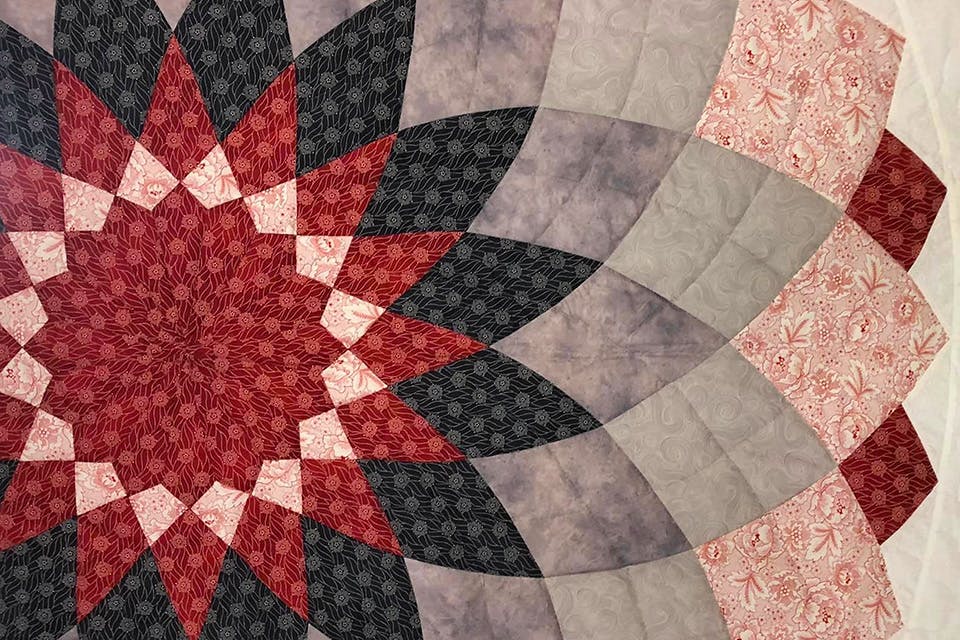
It's time to head west to the town of Athens and the Athens County Historical Society & Museum. New this month is an exhibit of clothing and quilts that were handmade in Athens County. 65 N. Court St., Athens, 740/592-2280. Mon.-Sat. 12-4 p.m. Admission free.

Travel southwest to Jackson, home of the Markay Cultural Arts Center. This 1930s art deco movie theater is in the process of restoration, but the lobby contains a cultural center with exhibition space. Managed by the Southern Hills Arts Council, the Center hosts nine visual exhibitions each year. August exhibits feature the work of local artists. 269 East Main St., Jackson, 740/286-6355. Wed.-Fri. 2-5 p.m.; Sat.-Sun. 1-3 p.m. Admission free.

Head back north to Lancaster, where The Fairfield Heritage Association operates two museums: the Georgian Museum and the Sherman House Museum. The former was Samuel Maccracken's 1832 mansion, while the latter is the birthplace of Civil War General William Tecumseh Sherman. 105 E. Wheeling St. and 137 E. Main St., Lancaster, 740/654-9923. Tues.-Sun. 1-4 p.m. Admission $6, seniors $3.50, students $1.

Ohio's Historic West

This was once Ohio's frontier, andthere's still plenty of evidence of that today. From Ohio's Indian Wars to the German Catholic immigrants who worked hard to build the canals and settle this area, the history of this area offers much to learn about the past. Small towns and their landmarks tell the stories, while natural sites exemplify some of that heritage as well. 

Begin this tour in Urbana where Cedar Bog Nature Preserve remains as the largest and best example of a boreal and prairie fen complex in the state. The bog has many rare plants and animals, along with outstanding wildflower displays. Every season features a different kind of beauty, but August and September bring more asters into bloom than even the wildflowers of spring. 980 Woodburn Rd., Urbana, 800/860-0147. Fri.-Sun. 9 a.m.-4:30 p.m. Admission $4, children 6-12 $3, children under 5 free.

An old Federal structure stands at the junction of the Historic National Road and the Old Dayton & Springfield Turnpike. Known today as the Pennsylvania House Museum, the recently restored stagecoach stop and inn was once the boyhood home of Dr. Isaac Funk (founder of Funk & Wagnalls, publisher of dictionaries and encyclopedias). Built in the 1839, the inn provided lodging for pioneers heading west on the National Road. 1311 West Main St., Springfield, 937/322-7668. Sat. and Sun. tours at 10 a.m., noon and 2 p.m. Admission $5, students $2.

Travel west to Tipp City and refresh yourself at Charleston Falls, part of the Miami County Park District. The 37-foot waterfall is surrounded by 216 acres of parkland, with 2.5 miles of trails and a newly renovated boardwalk to the lower viewing area. Because the waterfall flows over rock strata that are also found in New York State and Canada, it has earned the name, "Miniature Niagara." 2535 Ross Rd., Tipp City, 937/335-6273. Daily 8 a.m. to sunset. Admission free.

Farther west near Indiana is the town of Greenville and Bear's Mill. Built in 1849 and placed on the National Register of Historic Places in 1977, the mill is still used to grind cornmeal, whole-wheat flour and rye flour. Tour the four-story structure or relax in the wooded area surrounding the mill. Each month a different artist is featured on the second floor of the mill, and the store sells handmade stoneware and pottery by Bear's Mill potters. 6450 Arcanum-Bear's Mill Rd., Greenville, 937/548-5112. Tues.-Fri. 11 a.m.-5 p.m.; Sat. 9 a.m.-5 p.m.; Sun. 11 a.m.-5 p.m.

Turn around and head east to Piqua, where the Piqua Historical Museum tells the story of the town and what was once part of the Wild West. Piqua and the surrounding area was the meeting place of General (and future U.S. President) William Henry Harrison, whose army marched north to drive the British out of the Great Lakes Region during the War of 1812. Located in the Caldwell Historic District, the museum has more than 20 rotating exhibits about Piqua's past. 509 North Main St., Piqua, 937/773-2307. Tues., Thur. and Sat. 1-4 p.m. Admission free.

Travel back to the last century with a visit to Jackson Center in Shelby County. This is where the makers of Airstream trailers have established their headquarters, and facility tours demonstrate to the public how the Clipper, an American Legend, is built. Seventy-five years ago, founder Wally Byam incorporated aircraft construction methods to lessen wind resistance and improve the strength-to-weight ratio of his trailers. 419 West Pike St., Jackson Center, 937/596-6111. Mon.-Fri. tours at 2 p.m. Admission free.
 
Southwest Ohio Heritage Area

In the southwestern corner of the state, the countryside, small towns and big cities are rich in ancient and modern history, and they boast a plentiful lineup of museums, natural landmarks and historic districts. Part Wild West and part road to freedom, these counties are a testament to the struggles that many endured.   

Begin in Cedarville, home to the 160-plus-acre Indian Mound Reserve, Peterson Park and Cedar Cliff Falls. Managed by the Greene County Park District, the area boasts a blend of gorge, meadow, woods, river and marsh. Learn about Native American history with the Pollock Works, a Hopewell structure, and the Williamson Mound, an Adena structure — both hundreds of years old. 2750 U.S. Rte. 42 East, Cedarville, 937/562-7440. Daily dawn-dusk. Admission free.

In nearby Xenia, the Greene County Historical Museum features three floors of exhibits at its Brantley Carriage House Museum, an authentically restored Victorian Town House, and the historically significant Galloway Log House. Learn about Greene County history, from prehistoric hunters to Tecumseh to Norman Vincent Peale. 74 W. Church St., Xenia, 937/372-4606. Tues.-Fri. 1:30-3:30 p.m., Sat. 1:30-4 p.m. Admission free.

A short drive south to Waynesville takes you to the Museum at the Friends Home, gateway to the Quaker Historical District. Housed in the 1905 Friends Boarding Home, it features 23 rooms of historic exhibits. Each room highlights a local community or an aspect of early Quaker life, period clothing, local medicine and education. 115 Fourth St., Waynesville, 513/897-1607. Wed. and Sun. 1-4 p.m. Tours $5.

Just to the east is Springboro, a town platted in 1815 by Jonathan Wright, a Quaker. Many of the houses on South Main Street are original to the Quaker village. From 1820 to 1865 the town was a major stop on the Underground Railroad. Self-guided and guided tours are the best way to see it all. Contact the Springboro Chamber of Commerce. 325 S. Main St., Springboro, 937/748-0074. Daily 9 a.m.-5 p.m. Admission free.

This area is already noted as a place where freedom seekers found refuge. It's no surprise that the Warren County Historical Society Museum dedicates much of its space to an exhibit on the Shakers, a group that came to this country in 1774 as a result of religious persecution in England. Union Village near Lebanon was once the seat of the Shaker movement in the West. The Robert and Virginia Jones Shaker Gallery chronicles the lives of the Union Village Shakers. 105 South Broadway, Lebanon, 513/932-1817. Tues.-Sat. 9 a.m.-4 p.m.; Sun. 12- 4 p.m. Admission $4, seniors $3.50, children $2.

Finally, Harmony Hill in the township of Williamsburg was the home of Major General William Lytle, the founder of Clermont County. Today, the stone Dairy House is the only structure still standing, but there is a museum about William Lytle, Harmony Hill and Clermont County located next to the Dairy House. The Harmony Hill Dairy House and Historical Museum is home to the Clermont Historical Society. 299 S. Third St., Williamsburg, 800/796-4282. Open first Sat. of every month 1-4 p.m. or by appointment. Admission free.
 
Copyright © 2013 Ohio Magazine All rights reserved. | webmaster@ohiomagazine.com
1422 Euclid Avenue Ste. 730 Cleveland OH 44115