


September 2005
Robbins Crossing
On the edge of the Hocking College campus, a piece of the past lives on.
Judy Sinnott
Robbins Crossing Living History Museum is precisely what its name implies - a hands-on history lesson where everything is within reach. There are no roped-off areas. Visitors won't find signs with a "do not touch" message, because this is a special place where everyone is encouraged to get involved with history.
|
Patchwork Pride
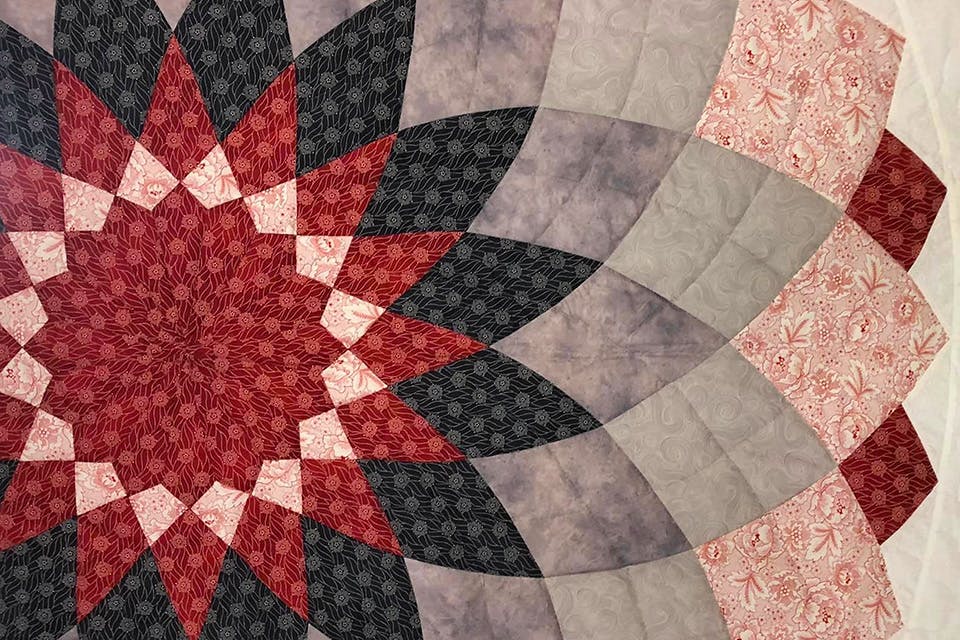
The barn at Robbins Crossing will be included in "Quilt Barns: a Patchwork Path Through Athens County," an effort by the Athens County Convention and Visitors Bureau to boost awareness of Athens County and enhance the beauty of the region. ACCVB Executive Director Sally Dunker adopted the project that partners with community-based groups of artists, quilters, property owners and civic and social organizations to decorate county barns with quilt squares.
As a tribute to the historical significance of the star brick that was manufactured in Nelsonville in the 19th century, the "Star Brick Block," designed by artist John Lefelhocz of Athens, is being added to the Robbins Crossing barn by artisans of the Nelsonville Public Square Arts District.
The quilt block designs are painted on 8-by-8-foot wood panels and then secured to the side of Athens County barns. Once all the Quilt Barns have been painted, a brochure will be developed to lead people along highways and byways to view the spectacular art.
Visit www.athensohio.com for a drive-it-yourself map and more information. |
"We knew a long time ago it takes more than a static display to interest people in learning about history," says Norm Fox, site coordinator for Robbins Crossing. "Involvement is especially important here. It's where we learn by doing. It is a constant learning environment for those who 'reside' at Robbins Crossing as well as those who visit here."
Reenactors, or living-history interpreters, are volunteers from the community, youngsters who are being home-schooled, and students from the Living History Interpretive Services program at Hocking College. Each weekend from May through October, they provide visitors with insights into the culture and lifestyle of the mid-19th century in the Hocking Valley.
Development of the log cabin settlement began in the late 1970s when the Ohio-Hocking Forestry Museum was established. The village was later named Robbins Crossing after Charlie Robbins, an early resident of Nelsonville and the original owner of the farm where Hocking College is located.
The first buildings on site were the Anthony house from nearby Hocking County and a white board-and-batten miner's house moved from its original site on Robbins Road, about a mile away, that presently is in the initial stages of restoration.
Ron Black, a former professor in the School of Natural Resources, took the original museum concept that focused on the forestry industry and modified it to create a working village. One by one, authentic log cabin structures that were built between 1830 and 1880 found their way to the campus. Most were constructed of logs cut from the Tulip Poplar but some are from White Oak trees. Several cabins were donated to the college from families who realized restoration and utilization gave them a new life.
Each structure at Robbins Crossing is a stand-alone station where work is done by hand or with simple horse-drawn tools. The blacksmith shop is one of the more utilized buildings and its expansion is expected to be complete by Paul Bunyan Show weekend.
According to Fox, "The blacksmith shop was built to accommodate a single blacksmith. As interest increased from students who want to learn these skills, we realized there was a need for more space and decided to expand the station. When finished, the expanded area will allow about eight students to train there. Once this project is complete, we'll focus on the construction of a potter's shop."
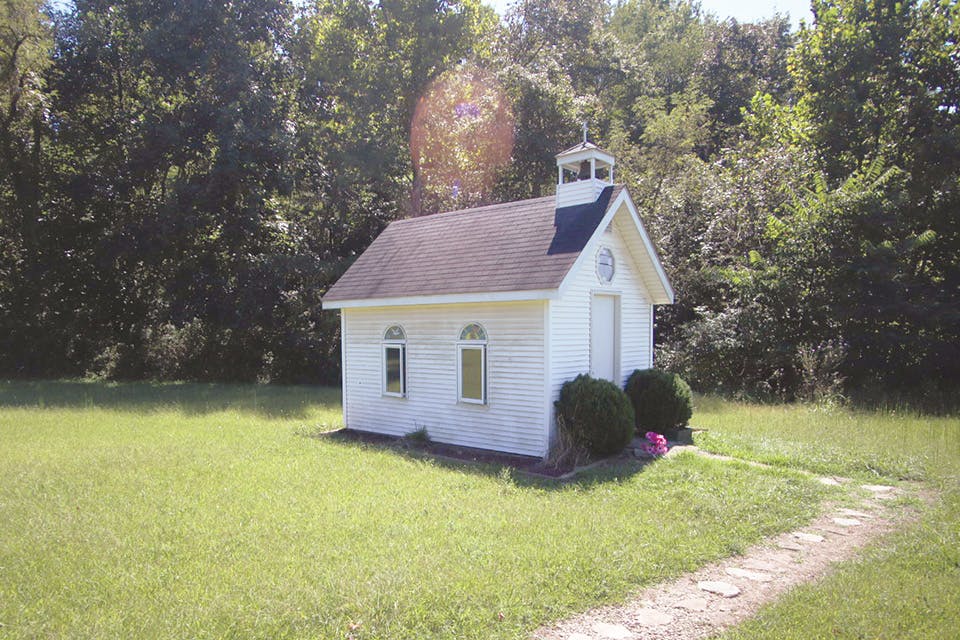
The blacksmith shop is one of about a dozen buildings at Robbins Crossing, which combines old cabins relocated to the site with newly constructed ones. As the newer cabins age, it's becoming increasingly difficult to tell the difference. A sampling of cabins includes a one-room school, a cooper shop, the doctor's house, a general store, and a vegetable and herb garden where food is grown and then cooked on the large cook stove that can be found in the Gladden House.
A large double-pen barn measuring about 25 by 75 feet is enclosed by a split-rail fence, hiding the more substantial metal fence that keeps barnyard animals such as pigs, goats, lambs, rabbits and ducks confined.
Fox says the animals are part of a petting zoo and allow interpreters to share animal care and training with visitors. "These are skills that are expected of those employed at many historic parks. We keep the animals through fall and bring them back again next spring when warm weather returns."
While sharing the area's history and preserving log cabins that are more than a century old fall within the mission of Robbins Crossing, tourism is another important focus.
"Passengers who ride the Hocking Valley Scenic Railway are assured of a visit to Robbins Crossing as part of their departure package. It's another way of partnering with others to create a more balanced approach that [we hope] will entice people to come back for a return visit," says Fox.
"Schoolchildren come by the busloads from throughout the region, and visitors to festivals such as the Hockhocking Folk Festival and the Paul Bunyan Show also enjoy the hospitality offered at Robbins Crossing," says Fox. "Our welcome mat is always out."
Be the first to leave a comment.