









January 2009 Issue
Not-So-Total Loss
Fire can either consume what it touches, or forge something new.

It was a garden party, but not of the sort you might think. A hosta party, maybe? It was a cookout, too, but a drizzly, chilly one.
There was a fire, but not the kind you want, like a campfire or a bonfire, something you could happily warm to. No, this was a fire fire. The awful kind you hope never happens.
The fire is really what the story is about. It all revolves around that.
I’ve been around fires a fair amount. I’ve camped beside them and cooked on them in woods around our state. I’ve covered them as a reporter at several papers in Ohio over the years, watching one building or another go up in smoke and then returning to the newsroom to reduce the event to tidy, even columns of type.
But only once have I personally known somebody whose house was totaled by fire. Burned into a complete loss. That’s something else entirely.
The friends in question were Ann and Chuck, who lived on what they called a “farmette” just a few miles north of Lebanon in the suburbanized fields of central Warren County, about halfway between Dayton and Cincinnati. The location suited them because she worked as an editor at the Dayton Daily News, which is how I knew her, and he toiled as a food and feature writer at the Cincinnati Enquirer. The farmette was a comfy commute for both.
It was about five acres with ancient oaks and maples, three barns, a small creek that sometimes proved annoying, to hear Ann and Chuck tell it, and a nice paddock for their dogs. They lived in an old farmhouse from the mid-19th century that had been smartly added on to over the decades. The bannisters of the central staircase were smoothed by more than a hundred years of handling, and Ann’s mix-and-match decorating style blended fine antiques with slick contemporary posters and artwork.
She and Chuck entertained a lot, and friends from Dayton, Cincinnati and points in between knew they’d be gathering each December for one of the best yuletide open houses anyplace, thanks in large part to Chuck’s fabulous cooking.
During the summer came the mid-July cookout, where you’d get the chance to see a lot of the folks you hadn’t seen since December. The cookout took place amidst the thing that was Ann’s true delight and passion: Her garden.
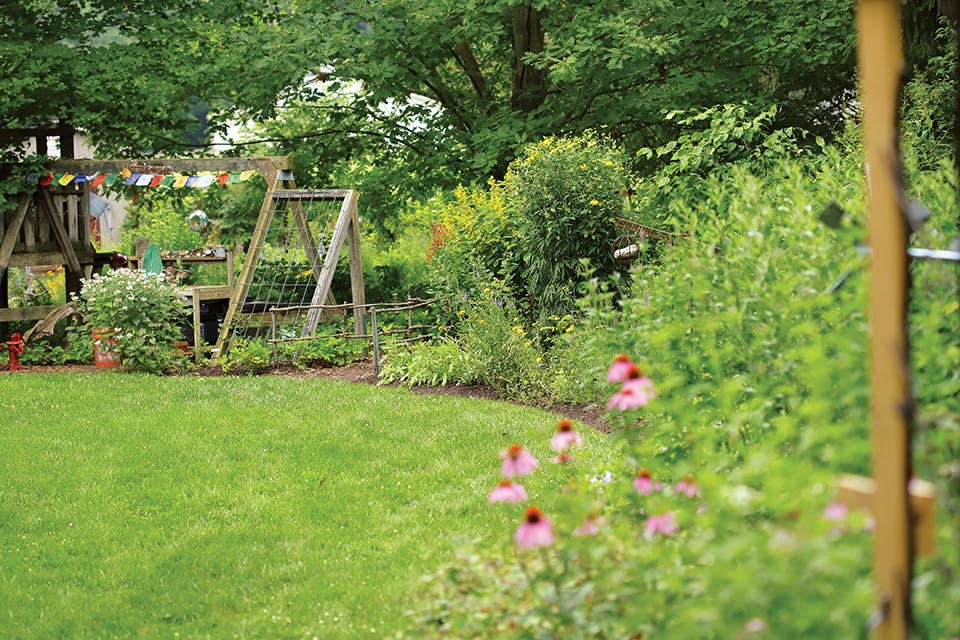
Ann is a gardener, through and through — one of those who knows the name and characteristics of each and every plant: when the yarrow flowers, when to cut back the bleeding heart and just how much shade the hostas want. Her shady front yard and the land all around the house were a horticultural explosion of color, leaf, texture and bloom. If you asked Ann what she did over the weekend, you kinda knew the answer.
As much as they enjoyed Ohio, however, Ann hankered to return to her native South. She talked often about wanting to retire in North Carolina, and I told her at least once to just wait a while, and Ohio would have North Carolina’s weather and she could just stay here. Ohio doesn’t have an ocean, she would remind me. True enough.
When the chance came to stay with our company but relocate to a great job on the N.C. coast, of course she took it. She moved quickly, while Chuck stayed behind to sell the farmette.
The old house needed a new roof, the realtor advised, and so they got one. One day, the roofers came back from lunch to find the house — well, fully involved. That’s what can happen when you toss your cigarettes off the roof into the side yard before you go to lunch.
The placed was destroyed. A total loss. They would have to raze it before the land could be sold.
So early in June, the e-mail arrived from Ann inviting the usual Dayton-Cincinnati party crowd to a final farmette farewell on an early June Saturday. Chuck would barbecue. There were, she warned, no modern bathroom facilities at the farmette any longer.
But here was the good part: Bring your shovels, gloves and buckets, she wrote. Anything you want to dig out of the garden is yours.
That was not a party I was going to miss, the last chance to see them both. Appropriately enough, it was rainy and cold. The drive down St. Rte. 48 to their house felt dreary and sad.
I perked up when I drove into their yard, though. Chuck had the grill going under the relative shelter of a maple near the barns, serving up slightly soggy pulled-pork sandwiches, while Ann was presiding over the uprooting and dispersal of her precious garden, watching the work of years scatter into pots that were bound for other plots and gardens. She’d already dug up and potted some plants and had them sitting out for friends to take, and helped us spade up the others.
“I want them to have a good home,” she said. She didn’t want her plants to perish beneath the bulldozer treads when the house was torn down.
I took some big blue hostas, some smaller variegated ones and some day lilies that told me they wanted to move to Kettering. I wrapped the dirty rootballs tightly in old sections of the Dayton Daily News and stuffed the bewildered plants into the back of my SUV, alongside a half dozen other folks who were also adopting greenery.
I wanted to see the fire damage, and Ann walked me through the burned-out house. We picked our way carefully through the darkened, sooty rooms, our footfalls crunching and squishing. The kitchen and dining room that had been home to so many festivities were blackened and ruined. A thick ashen odor hung in the air; I thought of the way the house had smelled of Chuck’s fine roasted brisket on those afternoons when my wife and I had come down for visits. Now soaked cushions, furniture parts, books, carpeting and debris lay piled about. Shelves yawned empty. Rain dripped through the collapsed roof and ceiling.
“Did you mean to leave this here?” I asked as I pointed to a colorful Southwestern tile that still hung on the water-damaged kitchen wall.
“How on earth did we miss that?” she asked, laughing and sticking the tile in her pocket to take to its new home. “I thought we got everything.”
What little furniture had been saved was cleaned, safe and dry in one of the barns. It smelled dusky with smoke. Chuck talked about the price of demolition bids, and how he was looking forward to finding something new for himself other than journalism. Ann talked about her new job and the big new house they’d bought. Soon the old place would be flattened, grassed over and sold. How many houses can you fit on a five-acre lot in Warren County? Folks in that fast-growing land know the answer to that.
It was sunny the next morning as my wife and I filled in the gaps in our landscaping with our gifts from Ann and Chuck. It’s always fun to handle the soil and work with plants, but this time was especially satisfying. Everything looked great.
When we sit now amidst our plantings, sipping a glass of evening wine, a bit of our friends is still nearby for us to enjoy. The hostas blend with their new neighbors, and the day lilies are sprouting bold and orange. They remind me how the people we know in life stick to us as we go along and help turn us into ourselves. They remind me that friendship and memory need only small prods to stay fresh in one’s mind. They remind me that fire can either consume what it touches, or can forge something new and worth keeping, and that you’re lucky if you know people smart and tough enough to make certain it’s the latter.
They remind me that when you think you are losing what you love, you can restore it to health by giving it away. Our friends understood that.
The hostas seem to like it here.
Be the first to leave a comment.