






August 2009 Issue
History in Brick and Mortar
These notable buildings have remarkable stories to tell.
Schoolchildren in Dayton have heard the story for decades: How the first white settlers poled their way up the Great Miami River from Cincinnati in flat-bottomed pirogues to find a better home. And how they stopped on the flat, fertile land where the Great Miami met the Mad and Stillwater rivers. And how one of the senior men, Col. George Newcom, built a cabin of squared logs on the riverbank that served many functions: general store, church, post office, courthouse, jail, inn and family home.
Daytonians young and old still visit the Newcom Tavern, which is commonly known in town as the oldest surviving building in Dayton. Since we live in an age of superlatives, in which we frequently argue about and make lists of the best, the tallest, the greatest of this and that, one might wonder: What are the oldest buildings in the state?
Well, that depends.
The oldest manmade structures in Ohio that we can still see today are the mounds created by Native Americans centuries ago. Constructed by the Fort Ancient, Hopewell and other people, the mounds were multi-purpose — sometimes for burial, but most often ceremonial — gathering spots where communities came together for civic, religious or even recreational purposes.
Most of the mound-building happened a thousand years ago, and today complex earthworks can be seen all over Ohio, from Newark to Marietta to Miamisburg and points in between, with the amazing Serpent Mound of Adams County the best-known of them all.
When it comes to buildings constructed since Ohio's days of white settlement and statehood, the matter is something of a mixed bag, ranging from the iconic and familiar — such as Newcom Tavern — to the dilapidated and endangered — such as Franklin County's Deardurff House, which some preservationists worry may not last much longer.
Here's a look at some of the oldest structures in a few cities around the state.
Dayton
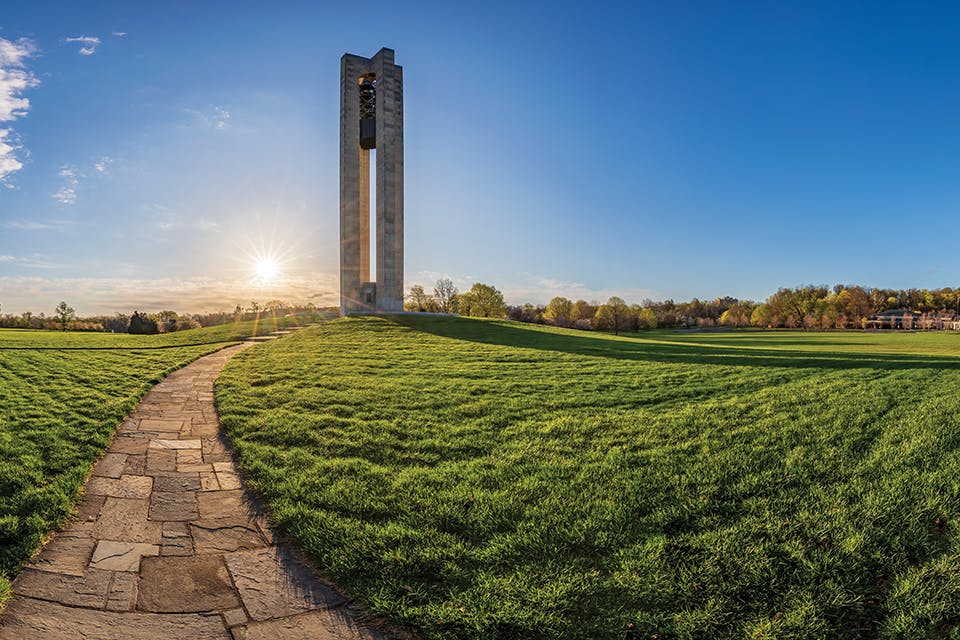
The all-purpose tavern Col. Newcom built in what became downtown Dayton didn't stay there forever. Endangered by progress, it was moved to Carillon Historical Park in 1965, where it sits today among other key buildings from the region's past. The original two-room, two-story cabin was added on to in 1798, and, a few years later, was covered in wooden siding to make it more permanent. The siding was removed at the city's centennial when the tavern became a museum. Today, Dayton History, the historical organization that operates Carillon Park, plans to protect Newcom Tavern from the ravages of time and weather by restoring the siding that would have marked its 19th-century appearance.
Newcom Tavern houses museum-piece artifacts of pioneer life, and is the site of popular “tavern dinners” in which visitors dine the way their forebears did.
For more information, visit
http://carillonpark.org/tourthepark.html or call 937/293-2841.
MariettaStudents of Ohio history know that the first permanent American settlement in the state, and the Northwest Territory, was at Marietta. It's no surprise that Ohio's oldest buildings are there.
In 1788, Rufus Putnam landed a colonizing party of about 50 surveyors, mapmakers, carpenters and craftsmen sent by the Ohio Company of Associates to the place where the Muskingum River ran into the Ohio. While there to lay claim to nearly 1 million acres the company had purchased, they built a stockade they called Campus Martius — Latin for “Field of Mars,” recalling old Roman forts — and finished it in 1791. From there, Ohio's settlement moved forward through Indian wars and immigrant expansion.
In 1928, the state built the Campus Martius Museum at the site of the fort and enclosed within it a wooden house lived in by Putnam and his family that was part of the original fort. It was restored in 1972 and remains under the museum's roof to this day. Right behind the museum is the Ohio Company's Land Office, from which settlers received deeds and transacted business.For more information, visit
http://ohsweb.ohiohistory. org/places/se04 or call 800/860-0145.
ColumbusThe oldest building in the capital city, unfortunately, has fallen into disrepair.
The Deardurff House, a two-story wood building from 1807 that served as Franklin County's first post office, is the oldest building in the city still on its original foundation. It was built in Franklinton, a pre-Columbus village eventually incorporated into the city. Built of squared logs and covered later with clapboard, it was added on to in 1860 and was used as a residence for the next 100 years. It was deteriorating by the 1970s, despite inclusion on the National Register of Historic Places.
“It's currently wrapped in black plastic sheeting to stabilize it,” says Kathy Mast Kane, executive director of the Columbus Landmarks Commission, which is helping to advocate for the building's preservation.
CincinnatiThe Queen City is home to the oldest brick home in Ohio that still stands on its original site — the famous Betts House, which was built in 1804 on 111 acres of farmland that back in that day was far from city life. Today, of course, it's smack in the middle of the downtown, and is a popular museum: the Betts House Research Center.
William Betts, who moved from New Jersey in 1795 to Pennsylvania and then to Ohio in 1800, finished building the two-story house in 1804 and raised four generations of his family there. By 1850, the area was a bustling, vibrant immigrant neighborhood. By the 1960s, however, the area was in serious decline, and the house was nearly lost along with many others. A citizens' group led by Betts' great-great granddaughter worked with the city in the 1980s to buy and restore it.For more information, visit
bettshouse.org or call 513/651-0734.
ClevelandCleveland's oldest building on its original site is the well-known Dunham Tavern, on Euclid Avenue between downtown and University Circle. It was built in 1824 by Rufus and Jane Pratt Dunham, who liked the location on the stagecoach road between Buffalo and Detroit.
As did many other homeowners in that day, the Dunhams first built a log cabin on their 13.75 acres of farmland, and later added on to it and put more-permanent clapboard siding on to finish things off. The house was completed in 1832, and the family sold it in the 1850s.
The tavern remained a calm eye at the center of the swirl of modernization, commercialization, construction and demolition that occurred along Euclid Avenue for the next century, until it was acquired by a nonprofit group in 1941 and turned into the museum people can visit today to see furnishings and displays from the early 19th century, along with beautiful adjacent gardens. Dunham Tavern is on the National Register of Historic Places.For more information, visit
dunhamtavern.org or call 216/431-1060.
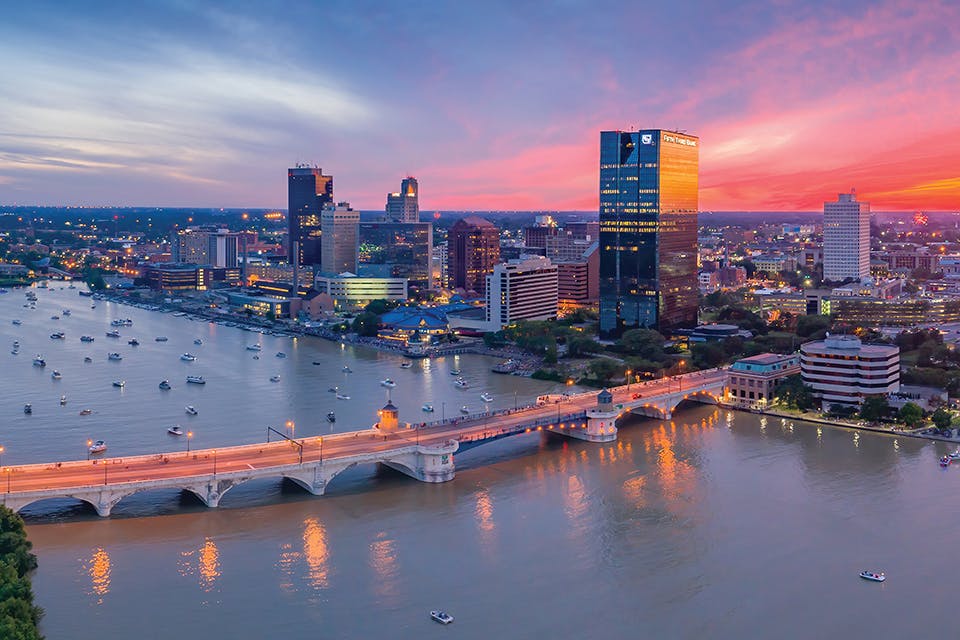
Lucas CountyThe oldest buildings in the Toledo area are actually in Maumee, a suburb that is older than Toledo and which was the place that folks back then thought would turn out to be the larger city. It didn't happen, but today historic Maumee boasts numerous beautifully restored homes that date from about 1826, nine years after the city was platted.
Marilyn Wendler, a local historian who wrote
Castles and Cottages and other books about Maumee, says the house that is likely the oldest is the Robert Forsyth House, built by the city's first mayor. The nearby George Knaggs House, built by a trader and Indian agent, may be older, “but it's hard to pinpoint, because so many of these homes are about the same age,” she says. And interestingly, “we're lucky that almost all of our historic buildings in Maumee have been in continuous use with their original purpose since they were built.”
For more information about historic Maumee homes, visit the town's Web site,
maumee.org/about/home tour.htm.
Be the first to leave a comment.