







October 2005 Issue
Head For the Hills
The Hocking region is brimming with autumn delights and recreational opportunities.
Randall Edwards
|
Finding Your Way in the Hocking Hills
The Hocking Hills are located primarily in Hocking County, in southeastern Ohio. The center of this region is Logan, located along U.S. Rte. 33 about 60 miles from Columbus.
There are at least two web sites offering information about lodging, dining and recreation. See www.1800Hocking.com or www.hockinghills.com . Both sites will connect would-be visitors to searchable lodging listings, where you can select your accommodations based on the amenities you want.
On your way to the region - or on a pre-visit scouting opportunity - visit the Hocking Hills Regional Welcome Center, located at U.S. Rte. 33 and St. Rte. 664 in Logan, operated by the Hocking Hills Tourism Association. You can reach the center by phone at 800/Hocking (800/462-5464) and request information by mail. There is also a Hocking Hills Visitor Center on St. Rte. 56 in Laurelville.
For information on the portions of the Buckeye Trail that run through the Hocking Hills, call 800/881-3062 or log on to www.buckeyetrail.org .
Take special care when visiting the Hocking Hills. The rock outcroppings are beautiful but can be dangerous. Hocking State Forest is the only state forest that is closed to all visitors after dark (most close at 11 p.m.).
Because fall colors are at their peak, the activities calendar is packed in October. Among the many opportunities: the Paul Bunyan Show at Hocking College (Oct. 7-9); the Fall Color Display at the Artisan Mall in Logan (Oct. 8); Grandma Gatewood's Fall Colors Hike at Hocking Hills State Park, a strenuous 6-mile jaunt through the best cave scenery in the park (Oct. 15); and Rural Ohio Appalachia Revisited (ROAR) Day at Lake Hope State Park, a celebration of Appalachian culture including music and craft demonstrations (Oct. 29).
When You Go ...
Stone Valley Ranch, 31606 Fairview Rd., Logan, 740/380-1701
Palmerosa, 19217 Keifel Rd., Laurelville, 740/ 385-3799
Lake Hope State Park, 27331 St. Rte. 278, McArthur, 740/596-5253
U.S. Forest Service, 13700 U.S. Rte. 33, Nelsonville, 740/753-0101
The Sandstone, 117 W. Main St., Nelsonville, 740/385-9479
Brass Ring Golf Club, 14405 Country Club Lane, Logan, 740/385-8966. www.brassringgolfclub.com
Jack's Steakhouse, 35770 Hocking Dr., Logan, 740/385-9909. www.jacks-steakhouse.com
Inn at Cedar Falls, 21190 St. Rte. 374, Logan, 800/653-2557. www.innatcedarfalls.com
Grouse Nest, 25780 Liberty Hill Rd., South Bloomingville, 800/222-4655. www.ashcave.com
Dining Lodge at Hocking Hills State Park, 20020 St. Rte. 664 S, Logan, 740/385-6495. Open April–Oct. |
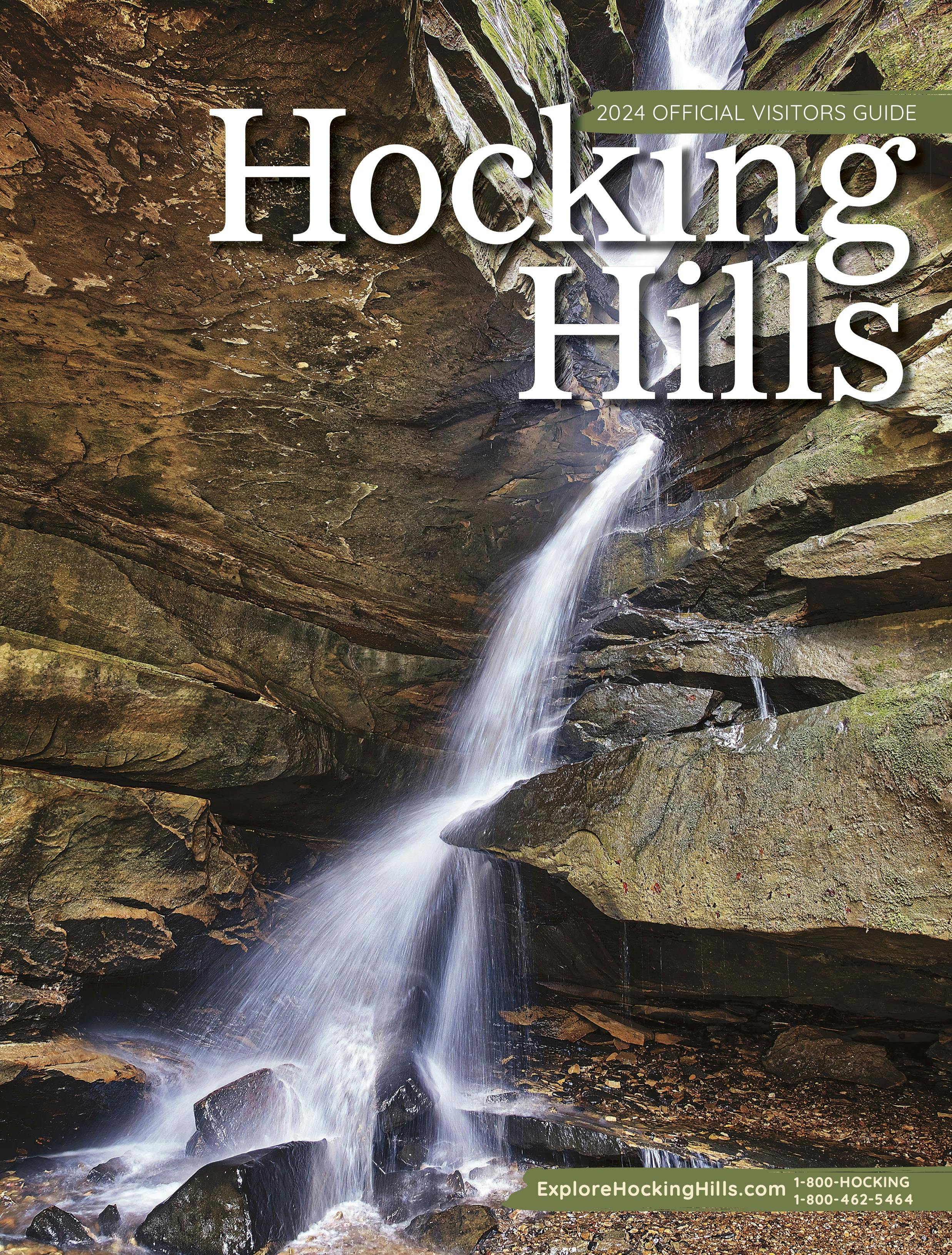
It's been raining for several days in the Hocking State Forest and the sandstone walls of the climbing and rappelling area at Big Spring Hollow are slick and slippery. To the novice climber, the 120-foot wall of dark, gritty rock seems unassailable, ground smooth by weather and covered in mosses and lichens. Yet hundreds of climbers come here each year to have an intimate experience with the rocks from which nature has sculpted one of Ohio's most beloved natural areas - the Hocking Hills.
"That's what the Hocking Hills are all about - geology," explains Mac Swinford, a geologist with the Ohio Division of Natural Resources' (ODNR) Division of Geological Survey.
The caves and rock formations that have drawn gawking tourists for at least 175 years are carved from the Black Hand sandstone, a gray- to buff-colored rock formation that's up to 300 feet thick in places, and was laid down more than 300 million years ago when southeastern Ohio was at the edge of a shallow sea.
Vertical breaks in the rock layers here allowed for easy water infiltration, Swinford says. The water filled the cracks and constantly froze and thawed, a natural cycle intensified by the presence of the continental glaciers, which stopped just short of this region. The result: well-known landmarks such as Old Man's Cave, Conkle's Hollow and Cantwell Cliffs.
As European-Americans moved into Ohio, the Hocking Hills rock formations became recognized as a destination for natural grandeur, while its forests and hollows offered a cool retreat from the summer's heat. Today, tourism thrives in the hills, with romantic cabins, miniature golf and a multitude of arts and crafts shops.
Still, it's easy to get away from the hustle and bustle, even in the autumn when every hot tub from Lancaster to Nelsonville is filled with tourists who booked early to enjoy the spectacular foliage display put on by the hardwood forests that cover the hills. Although the main roads may be crowded and lodging may be at a premium, those who favor outdoor recreation and more rustic overnight accommodations may find it easy to drop into the Hocking Hills without much notice.
If they do, they'll find plenty of adventurous ways to explore the natural beauty of a region that boasts more than 10,000 acres of accessible public land: the six areas within Hocking Hills State Park (including the most popular sites of Old Man's Cave, Cedar Falls and Ash Cave); the Hocking State Forest, which surrounds the park; nature preserves, such as Conkle's Hollow; and a section of the Wayne National Forest.
With the proper equipment and training, climbing and rappelling can provide an up-close and personal view of the Hocking Hills' famous rocks. The stone can be soft, which makes for charming rock formations but somewhat unpredictable hand-holds, says Jon Tobin, climbing enthusiast and instructor and proprietor of The Pedaler & The Packer in Athens, a store specializing in outdoor gear.
"It crumbles. So it's not conducive to lead climbing," Tobin says of the rock in the 99-acre climbing and rappelling area located on Big Pine Road in the heart of the Hocking State Forest. (In lead climbing, the participant is kept from falling by using mechanical gadgets that attach to the rock face by rope.) Instead, Tobin recommends rappelling or top-roping. In both cases, the climber is secured to a tree or other fixture at the top of the cliff.
The area is popular, with as many as 900 climbers a month logging in at the self-registration area monitored by the ODNR Division of Forestry. This is partly because the Hocking Forest climbing area is one of only two publicly accessible climbing areas in the state, but also because it's a lovely place to hang out.
"It's always shaded, even in the heat of the summer," explains Amy Dingle, coordinator of the Outdoor Pursuits extracurricular program at Hocking College. "There are routes for a lot of skill levels, from basics to intermediate, so it's perfect for teaching. And, despite all the use, it's not usually crowded, so you can actually get some privacy."
Don't want to trust your bones to a belay rope? There's a host of other ways to enjoy these hills.
For those who prefer to keep their feet on the ground, there are many miles of hiking trails in the region, including a scenic stretch of the 1,400-mile Buckeye Trail (www.buckeyetrail.org). Follow the blue blazes to stay on this backpacking trail, which enters the region northeast of Logan at St. Rte. 664 and Walnut Dawler Road, and follows back roads through Hocking County before entering public land along the Big Rocky Branch creek.
The Buckeye Trail eventually joins the most popular route offered among the 26 miles of hiking trails at Hocking Hills State Park - the 6-mile Grandma Gatewood Trail, a loop connecting Old Man's Cave, Cedar Falls and Ash Cave. This trail, which is also part of the North Country Scenic Trail, follows a gorge that has been cut through 150 feet of Black Hand sandstone. Through the years, there have been numerous improvements along the way, including steps and bridges, and it can be overrun with casual visitors at times. But more serious hikers shouldn't dismiss this trail; it can be moderately strenuous and extremely dangerous, with steep drops awaiting the careless. The views include mysterious recess caves, stately hemlock trees and dramatic waterfalls.
Some of the highest cliffs in the area belong to Conkle's Hollow State Nature Preserve, where hikers on the 2.5-mile rim trail tread carefully at the edge of 200-foot-high cliffs, looking down into the hemlock and birch forest in the valley below.
In addition to the state parks and nature preserves, hikers are welcome to use the 40 miles of bridle paths available in the state forest. (Remember that equestrians have the right of way.)
Horse trails wind throughout the state forest and bypass the state parks and nature preserves. The trails connect with a horsemen's camp, operated by the ODNR Division of Forestry, located off Keister Road (Laurel Township Road 231).
"Both horse and rider will get a workout here," wrote a visitor to an equestrian-oriented web site. The horse camp is available on a first-come, first-served basis and has limited spaces, but there are at least seven private horse camps in the area, including Stone Valley Ranch or Palmerosa, offering guided riding, tack shops, and carriage rides.
For those who prefer their saddles be mounted to bicycles, the back roads of Hocking County provide excellent bike-riding opportunities. Members of the Hocking Hills Bicycle Club have mapped out several possible rides, which are posted at the 1800hocking.com site (find "What to Do" on the top navigation bar, then select "Tours and Special Interests" and "Bicycling").
The rides vary in length and difficulty, from a leisurely one along Lake Logan to the 52-mile Logan-to-Laurelville loop.
Off-road bicycling is prohibited at Hocking Hills State Park, but Lake Hope State Park, located about 20 miles southeast in Vinton County, boasts 23 miles of single-track bike trail that was chosen as Ohio's top mountain bike trail by readers of Mountain Bike Magazine.
In addition, there are more than 70 miles of off-road-vehicle trails in the Monday Creek area of the Wayne National Forest, just north of Nelsonville. Bikers share the road with ATVs, and a trail permit is required. Contact the U.S. Forest Service for information about the permits.
One of the most enjoyable ways to see fall foliage is from the water. Well-watered trees take on the most vivid colors, and the reflection of the trees on the water doubles the visual experience. There are at least two canoe liveries in the Hocking Hills, providing trips of various lengths, in canoes and kayaks, on the serene Hocking River. (This river is not particularly challenging, but is scenic and offers great fishing.) Trips are traditionally two to four hours, although Hocking Valley Canoe Livery offers an overnight trip with a campsite on the river and a float past the Rockbridge State Nature Preserve.
Tom Hunt is a Toledo native, but when he graduated from the culinary arts program at Hocking College in the mid-1980s, he vowed to return one day to the charming hills of Hocking County.
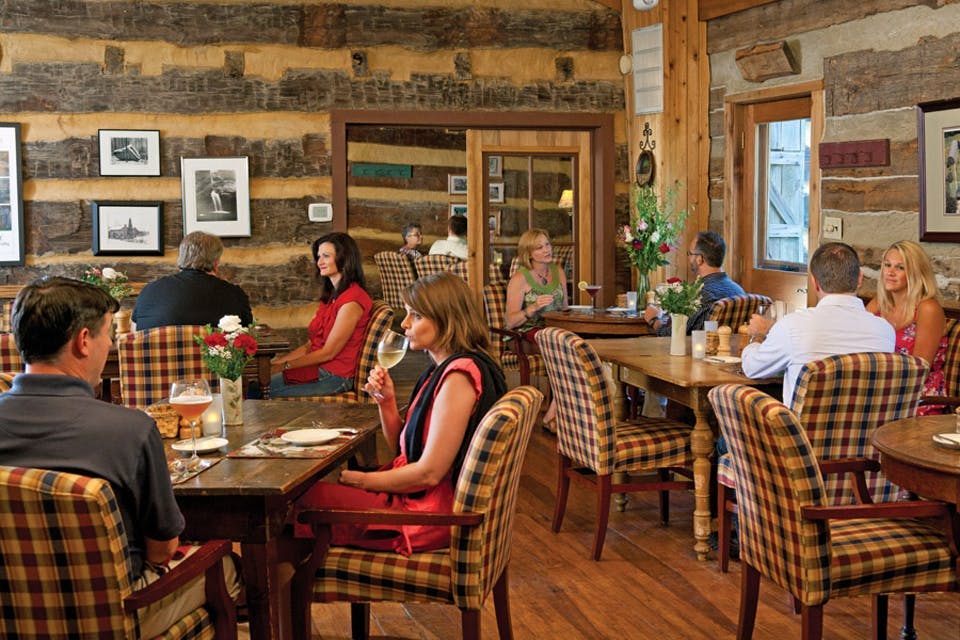
"I love it down here. The peace and serenity. There's a part of God down here," explains Hunt, who got his wish in September 2004, with the opening of a The Sandstone, a certified Angus beef house in Logan where he is executive chef and manager.
The restaurant is located in a historic building and certain features have been maintained throughout its renovation, including a 1940s-era mural that features a map of the Hocking Hills. Dinners range from $14 to $23 and decor includes photos of the local natural landmarks and ceramics from the Logan Art Gallery.
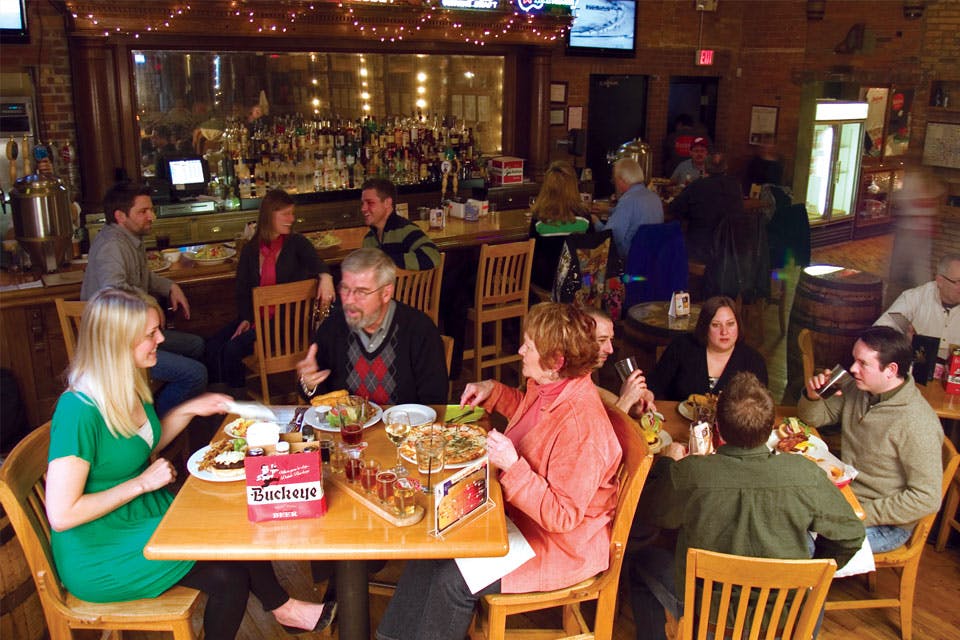
Other popular restaurants in the region include the dining room of the Brass Ring Golf Club, Jack's Steakhouse and the Inn at Cedar Falls in Logan; the Grouse Nest in South Bloomingville; and the Dining Lodge at Hocking Hills State Park, which is open April through October.
After a long day on the trail and a good meal, sleep comes easy in a tent with a good sleeping pad.
If you can live without the hot tubs and pillow-top beds, campgrounds in the Hocking Hills offer an inexpensive alternative close to nature. One of the most scenic in the area is at Hocking Hills State Park, where 172 campsites (all but 13 with electricity) are beautifully situated on a wooded ridge above Old Man's Cave.
This is a simple but comfortable campground, with shower rooms and laundry facilities in the main campsite, as well as 30 walk-in family camping sites with pit latrines. There's a swimming pool on the site and campers are within a short hike of the dining lodge.
While cabins and inns make up the vast majority of lodging opportunities in the Hocking Hills, there is a selection of private campgrounds, some within minutes of the state park. Some offer heated swimming pools, fishing ponds and playgrounds.
Whether you prefer to keep your nose to the rock face, your feet on the trail or your backside in the saddle, the Hocking Hills provide physically challenging courses against a backdrop of beauty and serenity - all within a couple of hours drive for most Ohioans.
Be the first to leave a comment.