





October 2008 Issue
Candy and Terror
For one 10-year-old, strategic trick-or-treating helped conquer Halloween fears.
Jeffrey Hammond
When I was growing up in Findlay, I found Halloween disturbing, even though I vaguely grasped the psychology behind it. We kids could ease our fears by dressing up as whatever scared us.
That was the idea, but it didn’t work for me. Part of the problem was my conviction that all holidays, despite their incidental fun, had something deadly serious at their center. I knew from my Methodist upbringing that Christmas was really about Jesus’ birth and Easter was about his death and resurrection. I exchanged gifts and sang carols, or went on egg hunts and dressed up for church — but beneath it all, I kept wondering whether Jesus would save me from hell. The religious underpinnings of Christmas and Easter were frightening enough, but Halloween seemed to cut right to the chase. With its ghosts, skeletons, zombies, devils and graveyards, Halloween was allabout hell.
This was the late ’50s, when Halloween was celebrated with virtually no parental supervision. Though a heady sense of independence came with a holiday that we kids managed pretty much on our own, this freedom had a downside: Frightening thoughts were allowed to fester unchecked. I was convinced, on some level, that dressing up as a ghost or a skeleton was risky; it felt as if I were pushing my luck by making fun of dead people.
The only redeeming thing about Halloween was the candy. Determined to conquer my fears enough to collect and eat it, I came up with a child’s version of whistling in the dark. If dying was the ultimate “trick” and candy was the ultimate “treat,” then the whole point of Halloween was to celebrate not being dead. This conclusion sounds grim, but that’s how I saw it: Eat, drink and be merry, for tonight is Halloween.
This, in turn, gave me a way to celebrate Halloween without mocking ghosts or making them mad. Since ghosts were dead people, and since dead people could no longer eat, I decided that I would eat my candyfor them, as a kind of stand-in. This logic, however screwy, turned a rabbity boy’s love of sweets into an affirmation of selflessness.
The next logical step was to honor the dead as efficiently as possible. This meant turning trick-or-treating into a rational science. I had a strong incentive for this, because the more candy I collected and ate, the less scary Halloween seemed.
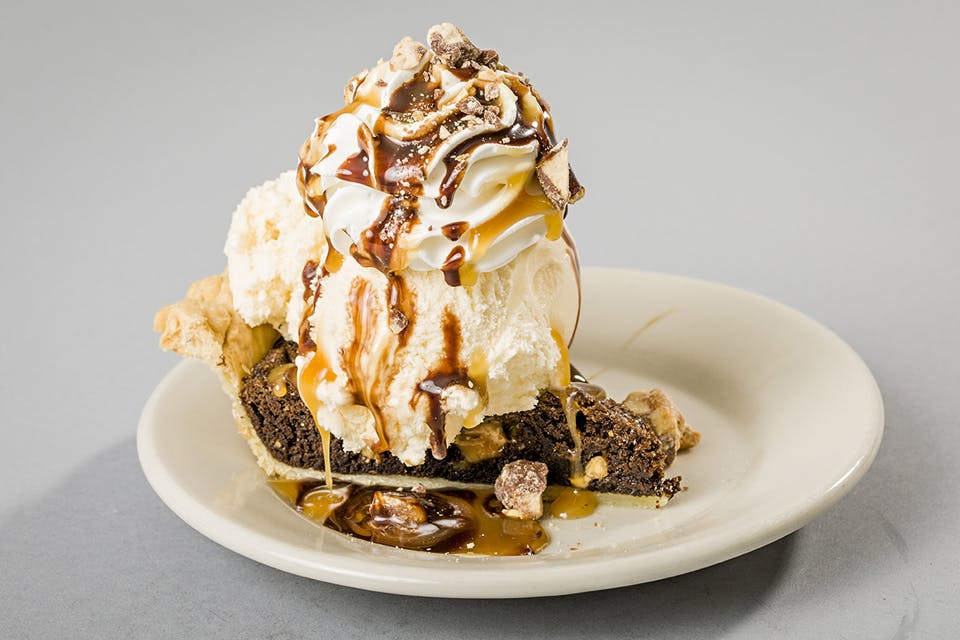
I became a connoisseur of trick-or-treat handouts, like a wine steward whose expertise is chocolate and nougat instead of merlots and zinfandels. The most highly prized items, of course, were full-sized candy bars: Baby Ruths, Butterfingers and PayDays. Next in rank were the small-size versions of these, along with Tootsie Rolls, Tootsie Roll Pops, and packs of M&Ms. Lower on the scale came popcorn balls, which sometimes got stuck to other things. Lower still were those dot-candies that came on strips of paper and that sweet powder that came in straws — both made you too thirsty. Next came candied apples, which were all right until you finished the caramel coating to expose a plain old apple. At the bottom of the rung were packs of chewing gum, as unexciting a treat as I could imagine.
Given my interest in amassing huge quantities of this stuff, I could have written a time-motion study on howto trick-or-treat. It was important to choose a costume that was simple enough to let you see well and move fast, but not so minimal as to be ineffective. It wouldn’t do simply to wear a grocery bag on your head: Nobody would reward such an obvious lack of effort. My costume of choice was a plastic mask and one of my father’s coats, which hung with a funereal, cape-like effect. Skull masks were out because they were too scary; rubber masks because they made me sweat too much.
It was also important to choose a sturdy bag — not a paper grocery bag, but one of those nice department-store jobs with strong handles. A trick-or-treat snob, I mocked amateurs whose bags kept tearing and who had to grope for fallen treats on the dark sidewalk.
An efficiency expert in trick-or-treating, I avoided houses with no porch light on: They were a waste of time, and we were apt to get yelled at. I avoided the houses of childless couples: They didn’t know the difference between good candy and bad. I avoided houses where bad-boy teenagers lived: Nobody wants to get beaten up on Halloween. Finally, I avoided the houses of old people, who took too much time trying to guess our identities or what our costumes were supposed to be. Then, too, old people’s treats were disappointingly wholesome: apples, oranges or unwrapped cookies that crumbled in the bag.
A final principle of efficient trick-or-treating was to never actually do a “trick.” Toilet-papering a house or soaping its windows ate up too much time.
When I was 10, I devised a scheme to amass the biggest Halloween haul ever. I enlisted two of my classmates at Whittier Elementary; although Dick and Gary didn’t share my Halloween fears, they were keenly interested in a record haul.
They arrived at my house on their bikes, and I laid out the plan. Opening the Findlay phone book to the town map, I marked our three houses with an X. Designating each house as a home base, I carefully penciled in the boundaries of an Eastern Zone, a Central Zone, and a Southern Zone. In this case, greed was curbed by practicality: We didn’t know any kids who lived in Findlay’s north or west side. Since I lived at the east edge of town, we would hit the Eastern Zone first and stash the loot at my house. Then we would ride our bikes unencumbered to Dick’s house, grab fresh bags and hit the Central Zone. After leaving that loot at Dick’s, we would ride to Gary’s and cover the Southern Zone. We couldn’t lose: With three bags each, we’d be in candy for weeks.
The Eastern and Central zones went without a hitch, but we got behind schedule halfway through the Southern Zone. By 10 p.m. the porch lights were going out, and we were the only trick-or-treaters still making the rounds. “It’s getting a little late, isn’t it?” snapped one man as he slammed his door and left us treatless. Still, our success had been astonishing. Though our Southern Zone bags were only partly filled, two full bags awaited each of us at Dick’s house and mine.
When we left Gary’s house, I decided to leave my Southern Zone bag there and retrieve it later because I didn’t want to spill anything in the dark. Dick insisted on taking his bag along in order to save a trip back. On the ride home, we began to get genuinely scared — and not of supernatural beings. If anything was going to get us, it wouldn’t be a ghost or a demon, but a very real Findlay city cop. We shot along the dark streets, pedaling like fiends and ducking into alleys and behind bushes whenever headlights approached.
Dick, who had more at stake, was outpedaling me and bragging about how cool it was to have a bike with three speeds when we hit the railroad tracks on East Sandusky Street. He took the hump too fast and his bag went end over end, soaring above his handlebars, falling back down with a twisted handle, and feeding itself into his front spokes. As the bag got shredded and a shower of treats bounced off the pavement, he had just enough time to curse before he thumped down sideways. His back wheel was still spinning as two or three candied apples rolled off into the darkness.
Whimpering as he picked himself up, Dick begged me to help him gather his haul. We frantically stuffed candy into our buttoned-up coats until an old Chevy swooshed by and squashed much of what we hadn’t grabbed. As the car of teenage boys crossed the tracks, one of them made an obscene comment and gesture. For some reason, we began to laugh — so loudly and insanely that we were sure the boys heard us. Figuring that they would return and beat us up, we hopped on our bikes and left everything where it was.
The next day, when I emptied my three bags onto the kitchen table, my mother was impressed — though in a horrified sort of way. It would be pleasant to report that so tangible a symbol of a 10-year-old’s greed exposed my flimsy rationalizations and shamed me into living a better life.
Instead, I remember gazing at my haul with total satisfaction: I knew that some fear had been conquered here — and what better proof than a giant mound of candy? By eating it, I would be the very opposite of a ghost. And because I’d be eating it in honor of the real ghosts, I was reasonably sure that they’d leave me alone for another year.
Much of my candy went stale before I could eat it. Mom wound up throwing it out a little at a time so I wouldn’t notice, though I assuredly did. But that was all right, because deep down I realized that this immense pile was more about terror than greed — and in that regard, the candy had done its job.
Another Ohio Halloween had been safely navigated. The darkness of the unknown had once again been dispelled by the daylight of chocolate and nougat.
Jeffrey Hammond is Reeves Distinguished Professor in the Liberal Arts and Professor of English at St. Mary’s College of Maryland. He is the author of Small Comforts: Essays at Middle Age, recently published by Kent State University Press.
Be the first to leave a comment.