




Printer Friendly VersionEmail A FriendAdd ThisIncrease Text SizeDecrease Text Size
March 2012 Issue

Botanical Wonders

Goldenseal Sanctuary’s 378 acres in Southeast Ohio protect more than 600 kinds of medicinal plants.

Paul Strauss (right) and Chip Carroll lead interns through the Goldenseal Sanctuary.

Jane Rogers

Goldenseal Sanctuary is affiliated with the nonprofit United Plant Savers.

Jane Rogers

Goldenseal flower

Jane Rogers

Goldenseal seeds

Jane Rogers

The slippery elm rests on the soft forest floor. The downed tree is settling into the rich soil from which it began life many years ago as a sapling. Herbalist Paul Strauss gently places his hand on the trunk, pauses, and turns to a small group walking through the southeastern Ohio woods.

“When a tree has given itself for you, you accept it and use it for medicine,” says Strauss, also a conservationist and organic farmer. “But we would never take this tree down ourselves.”

Strauss fishes into his pants pocket for a small jackknife, and with the skill of someone who has skimmed bark many times before, removes the legendary tree’s outer layer. Under the dark rough skin lies a pure cream-colored wood, smooth and cool. He passes out small strips and invites others to taste the sweet-flavored gift that smells of good earth. A fine coat of gel covers the trunk where the bark is removed, giving the tree its name. Herbal medicine made from the tree is used as a diuretic, emollient, expectorant, laxative and more.
 
Slippery elm (Ulmus fulva) is just one of more than 600 kinds of medicinal plants growing in the Goldenseal Sanctuary in Rutland Township. The 378-acre sanctuary is affiliated with the nonprofit United Plant Savers (UPS), an organization based in Vermont and founded in 1995. Its mission is to protect at-risk native medicinal plants in the United States and Canada in their natural habitats. The group also encourages cultivation and responsible wild-harvesting so future generations can benefit from nature’s drug store. 

Goldenseal Sanctuary is the UPS’s crown jewel among its network of several botanical sanctuaries around the country. Strauss says when UPS founder Rosemary Gladstar visited the Ohio sanctuary for the first time, “she wept, knowing that we had a lot of herbs at risk [for extinction] and she had never seen so many in one place.”

In spring, American ginseng (Panax quinquefolius), bloodroot (Sanguinaria canadensis), wild yam and mayapples awake under their winter blankets of soil to begin their growing cycles. Goldenseal (Hydrastis canadensis), Virginia snakeroot (Aristolochia serpentaria) and blue cohosh (Caulophyllum thalictroides) also thrive in the rich calcium-and-magnesium-laded soil of the Appalachian foothills. Wild geranium and elderberry grow happily unchecked.

Goldenseal (also called yellow root) has disappeared from many of its native habitats because of  over-harvesting. The herb, used to treat an abundance of ailments including stomach and circulation complaints, wounds and rashes, was picked by individuals who “didn’t get aspirin off the shelves, but used it instead,” according to Strauss.
  
“We have more species of shrubs and trees, which I call our big herbs, here than almost anywhere else in the world except the rain forests,” says Strauss, who stops along the way to tap a tall black oak to “listen” to its health. “And we are the first farm in the United States to specifically protect medicinal plants. Our goldenseal has doubled in size over the past 30 years because we leave it alone. It covered about two or three acres. Now it has grown to six acres in the past 15 years.”

Strauss stands in what was once part of his private land, now owned, as are other former farms, by the UPS. After years of working his farm, Strauss realized he needed an entire community of like-minded people to protect the vast area, and he enlisted the aid of UPS, herbalists and conservationists across the U.S.

The sanctuary is now further protected because it is surrounded by properties owned by those with the same mission as UPS. Chip Carroll, Goldenseal Sanctuary’s director of interns, visitors, trail maintenance and education — and a national expert on ginseng — lives on an adjoining property. Strauss, who calls himself “a steward of this property for a long time,” lives on another. He harvests herbs on his Equinox Botanical Farm and commercially markets a number of herbal products.

“We are not a commune, but a community,” explains Strauss. “We have a 2,500-acre corridor of farms and land that act as a buffer and protection for the sanctuary.”

The arrangement has provided an eight-mile-long, Talking Forest Medicine Trail through the sanctuary and a total of 1,200 acres through the corridor, open to the public by appointment. Visitors who walk the paths, which vary in difficulty, cross small wooden bridges, duck under huge fallen logs and hear woodpeckers letting intruders know this is their territory.

Quaint hand-painted, recycled slate signs are found frequently along the trails for instant plant identification. Floragraphs — information sheets in weatherproof boxes — also answer questions such as, “What are the medicinal uses for black haw?” Herbal and plant identification courses are held in the sanctuary’s traditionally shaped yurt filled with modern classroom amenities.

The four- to eight-week intern program is the most intense educational offering of the sanctuary and attracts students from all over the world. Botanists, herbalists, herb gardeners and nature lovers stay in a barn converted into a dormitory. Some days, when a small group of interns does field work, they move reverently and surreally through the damp, early morning woods. Sprites among tall oaks, interns clear trails, examine herb roots and learn to become part of the forest.

“I try to think like a plant,” says Strauss, who “escaped New York City and society at 18,” and who studied herbals with Native Americans and other experts in New Mexico before moving to Ohio. “I try to think what is best for the plants. We have one of the biggest botanical areas on the planet here. In Meigs County, logging, limestone and coal have been important. But I want the people all over Ohio to know we are also rich with plant life that can be a huge economic benefit if it is carefully managed.”

Strauss approaches a clearing in the forest to point out a group of huge limestone slabs. The grouping looks like a kind of miniature ancient Stonehenge, but the stones have been moved to the area from other parts of the sanctuary and are used as a table and chairs. The seating overlooks Heart Pond (one of 10 ponds created on the property) to attract wildlife and serve as an old-fashioned swimming hole. Dragonflies the size of small helicopters fly across the water and deer stop to drink.

Built on a plateau and using gravity, the pond needs no electrical pump assistance to provide water to the sanctuary’s greenhouse, gardens and fields when rainwater is scarce.

“There are several endangered plants here, including showy skullcap, desmodium and the fringed orchid,” says Strauss. “I don’t know what will become of the sanctuary when I go. And time is going fast. You have to get the young people interested if there is any hope for the plants, the land, all of us.”

Strauss finishes his walk through the eight acres of prairie established from cleared land at the edge of the forest. Fields of jewel-toned sunflowers, echinacea (purple-petaled cone flowers) and goldenrod will ignite the prairie with brilliant color in late summer and early fall.

Strauss breaks off a small, dried sprig of a gray-headed coneflower, left over from last summer. (No visitors are allowed to pick any part of a plant.) He rolls a small handful of tiny black seeds into the palm of his hand and presents them to his guests.

“Crush a few seeds and notice that cleansing, aromatic smell. Song birds just devour them and they really grow well here,” says Strauss, with a sense of urgency. “Take them! Plant them!”

Goldenseal Sanctuary is located in Rutland Township, in Meigs County. Most trails are open year-round except in inclement weather. To request an appointment to tour the sanctuary, call Chip Carroll at 740/742-1111. For information about internships and classes, or to make a donation, visit unitedplantsavers.org.


Botanicals in Your Back Yard

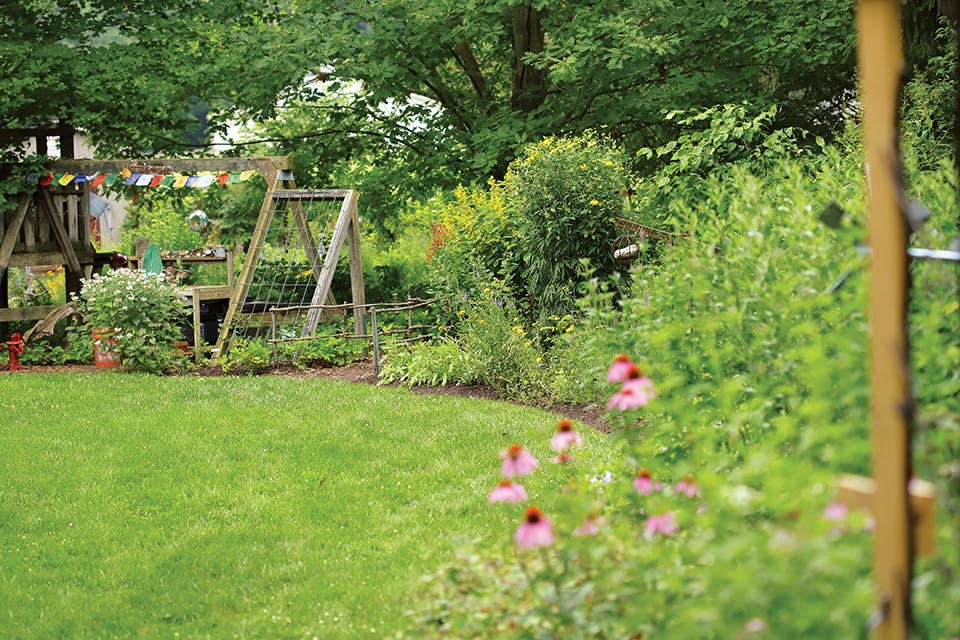
Most medicinal herbs should never be wild harvested. Most need a very specific habitat and won’t transplant well. It is also illegal to take plants from state or national parks or forests without a permit. But some medicinal herbs are commercially grown and can be added to residential gardens. Herbs can be purchased at some garden centers or ordered from specialized seed catalogs. The United Plant Savers also holds Plant Give-Away events
for members.

To grow goldenseal, it helps to own a patch of Ohio woodlands with a rich, moist, loamy soil, as well as good water drainage and about 60 to 70 percent shade. But if you are lucky, it is also sometimes possible to tuck a few plants into a backyard native wildflower garden. To grow goldenseal:

Step 1 — Site Preparation: Begin with a humus-rich soil under natural shade or a man-made canopy. The general soil preparation is the use of lime to create a soil pH of 5.5 to 6.0.

Step 2 — Propagation: Goldenseal can be best started from rhizome pieces planted in the fall. Plant two to three inches deep. Be patient. It can take three to five years to grow harvestable roots from rhizomes, longer with other propagation methods.

Step 3 — Mulch: Keep the area around goldenseal weed-free and use hardwood bark chips or leaf humus. Rake back the mulch to one to two inches before the plants emerge in spring.

Step 4 — Harvest: Divide the plants or harvest the roots in fall when fully mature.  
Related Categories
- Life


Subscribe
COMMENTS
Monday, April 23, 2012 by Josh
As a former intern of the UPS program I have fond memories of this herbal sanctuary. Thank you for the great reminder!
ADD YOUR COMMENT


Copyright © 2013 Ohio Magazine All rights reserved. | webmaster@ohiomagazine.com
1422 Euclid Avenue Ste. 730 Cleveland OH 44115