



Printer Friendly VersionEmail A FriendAdd ThisIncrease Text SizeDecrease Text Size
July 2005 Issue

A Day in the Valley

You don't have to be an avid outdoor enthusiast to appreciate the charms of the Cuyahoga Valley National Park.

Rebecca Jones has led tourists through the winding passageways of Mammoth Cave and helped hikers keep a watchful eye out for alligators in the Everglades. But the interpretive park ranger is most at home in Ohio, introducing visitors to the wonders of the Cuyahoga Valley National Park. The 33,000-acre, 20-mile recreational area stretches between Independence and Akron and serves as an evolving timeline, grounded in the past through its commitment to conservation and preservation of natural resources, yet firmly rooted in the present with a full schedule of concerts, seasonal retreats and art shows.

Happy Trails

If visitors to Century Cycles bike shop in Peninsula look up at the ceiling, they'll see a map festooned with tiny pushpins marking the hometowns of the shop's customers. This is not an Ohio map, or even one of the United States or North America; it's a world map, and the pins are stuck in cities from Helsinki to Sydney, not to mention most U.S. state capitals.

"I've probably had more people from out of state than from Ohio today," Derrick Kortvejesi, the shop's service manager, says on a bright-but-cool spring weekday morning well before high season. "We've had customers from Michigan, New York and New Jersey."

Century Cycles is a fine shop, but Kortvejesi knows the reason he draws so many out-of-towners is that his shop sits on the Cuyahoga River and square in the path of the Ohio & Erie Canal Towpath Trail, the centerpiece of the Cuyahoga Valley National Park. "Absolutely it's good for business," he says. "Without the towpath, this would be just another bike shop."

The Cuyahoga Valley National park is indeed a worthy destination for bicycling, hiking, bird-watching and other outdoor pursuits. The Towpath Trail is a relatively level thoroughfare paved with crushed stone, and is where mules once pulled barges along the Ohio & Erie Canal. A 20-mile stretch of the towpath passes through the Cuyahoga Valley National Park, near popular tourist destinations including Blossom Music Center, the summer home of the Cleveland Orchestra; and the historic Hale Farm & Village. The reconstruction of this trail in 1993 turned the Cuyahoga Valley into a recreation destination.

The park service provides a variety of scheduled events for visitors, including hikes, lectures, music, guided bike rides and children's programs.

But you don't need a ranger to have outdoor fun.

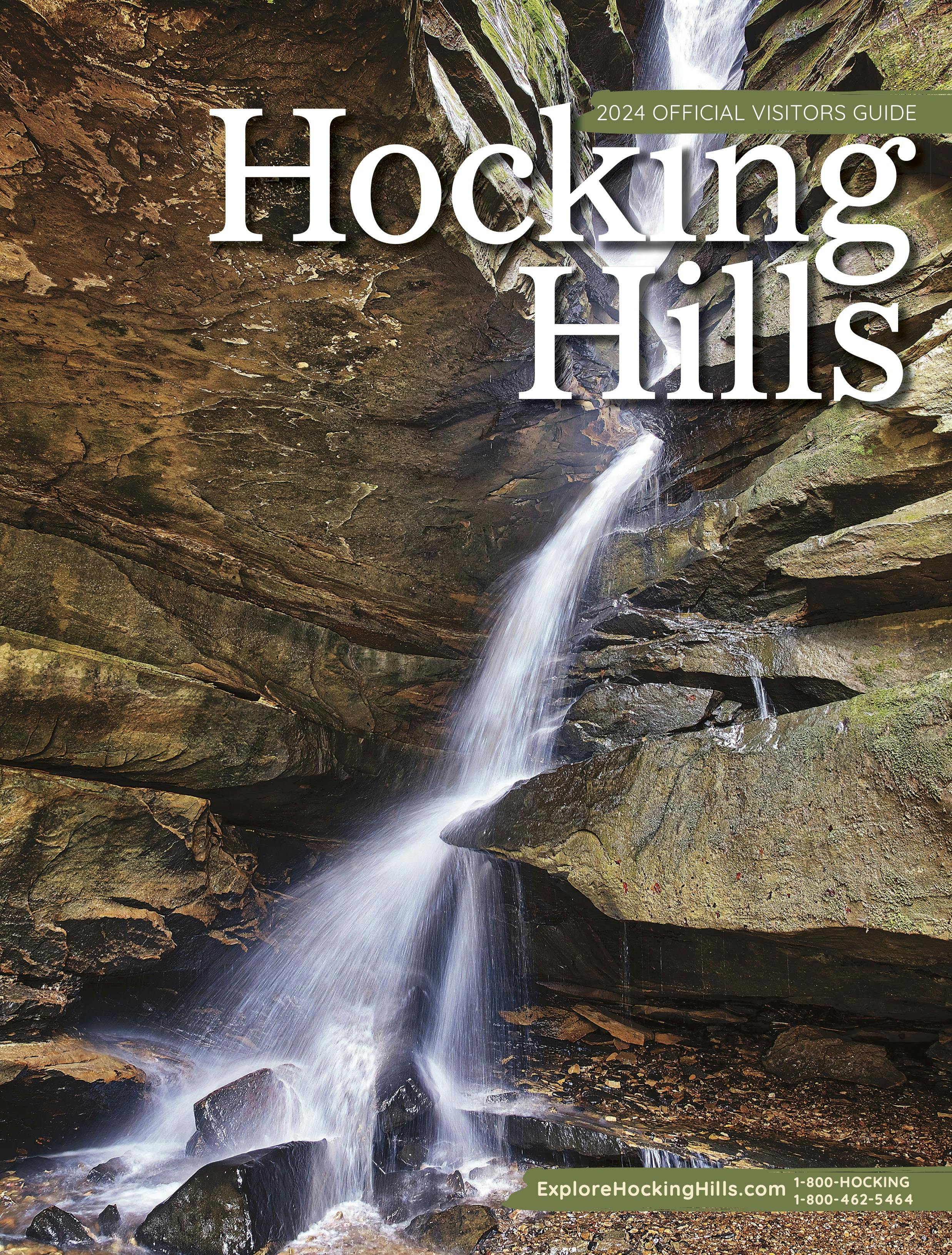
One of the prettiest short hikes is the Brandywine Gorge Trail, a 1.5-mile loop that includes the overlook of the namesake 65-foot falls in Sagamore Hills. (There are steep drop-offs on this trail, so watch your step.)

The most recent twist to bicycling in the park is to take the train. The Cuyahoga Valley Scenic Railroad has a new service that allows bikers (and hikers) to ride one way from one train stop to another between Independence and Peninsula. The train has been equipped with a baggage car converted to hold bicycles, so pedalers can ride up to 13 miles of the towpath without having to double back.

The park was named an Important Bird Area last year by the conservation group Audubon Ohio, in recognition of the many and varied habitats in the valley for nesting and migratory birds. The most unexpected spot to view them is the former site of the Richfield Coliseum, near the intersection of St. Rte. 303 and I-271. The former home of the Cleveland Cavaliers and past host to top rock 'n' roll acts, the 60-acre Coliseum site has been cleared of all concrete and asphalt and is now a popular place for grassland birds, such as meadowlarks, bobolinks, and the rare Henslow's sparrow. Other popular birding locations include the Ira Road beaver marsh (at its peak during the waterfowl migration in March and November), accessible from Ira Road or the Towpath Trail near Bath, and the hemlock and mixed ravine forests of the Ledges area off Kendall Park Road, about three miles west of Hudson.

Horses are welcome on designated park trails, but this is a "bring-your-own-horse" park -- no rentals are available in the valley. Connector trails allow for a full day of riding, and horse-trailer parking areas are provided at the Everett Road covered bridge, just northeast of Bath, the Wetmore trailhead, just south of Peninsula, and Station Road Bridge, just west of Sagamore Hills.

"People will take a dose of the park -- whether it's hiking, biking, bird-watching, or family picnics -- and feel better about their lives," says Stephen Sedam, development director for the Cuyahoga Valley National Park Association, a nonprofit support organization for the park. "And once people come here, they come back.

"We have very few one-time visitors."

Before Setting Out...

Information on outdoor pursuits in the Cuyahoga Valley National Park can be obtained at the following visitor centers:

Canal Visitor Center (see above)

Happy Days Visitor Center, 500 W. Streetsboro Rd. (St. Rte. 303), Peninsula, 800/257-9477

Hunt Farm Visitor Information Center, 2054 Bolanz Rd. (between Riverview and Akron-Peninsula Rds.), Peninsula

Peninsula Depot Visitor Center, 1630 Mill St. (off Akron-Peninsula Rd., north of St. Rte. 303), Peninsula

Where to Eat, Where to Stay

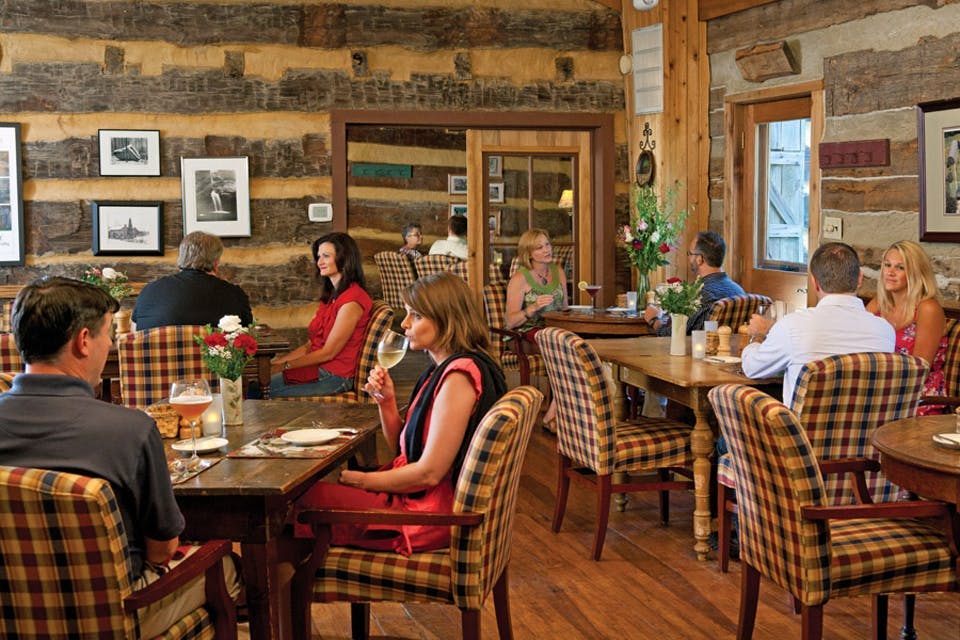
End your day in the park with an overnight stay at The Inn at Brandywine Falls (8230 Brandywine Rd., Sagamore Hills, 888/306-3381, www.innatbrandywinefalls.com), a bed-and-breakfast housed in a restored 1848 Greek Revival home. Each guest room is filled with period antiques and features private baths.

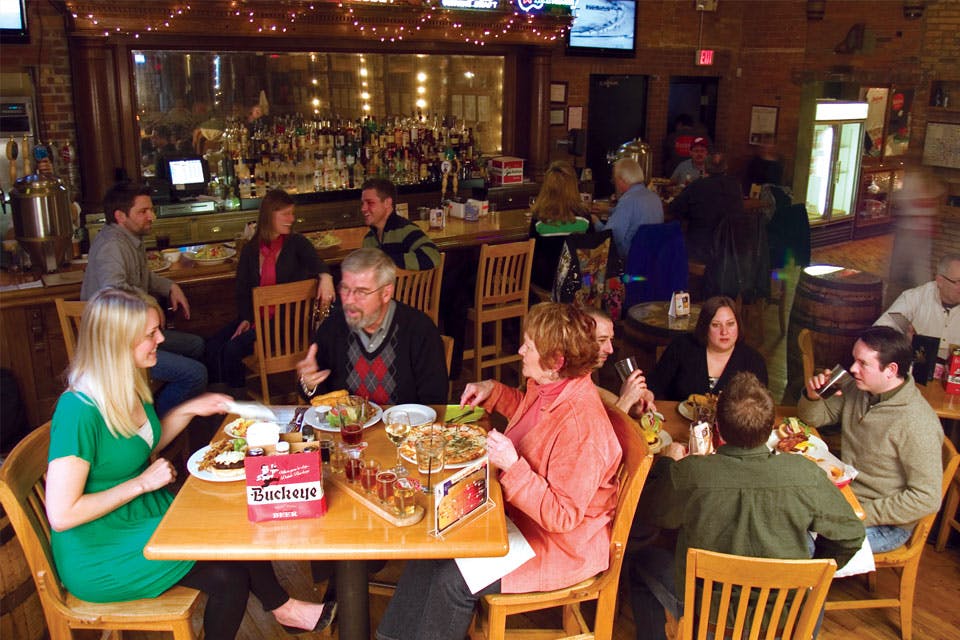
The Ohio Canal town of Peninsula is filled with quaint shops and eateries, including The Winking Lizard (1615 Main St., 330/657-2770), known for its burgers and barbecued wings, and Fisher's Cafe & Pub (1607 Main St., 330/657-2651), where specialties of the house include pasta, steak and seafood.

When You Go ...

Canal Visitor Center, 7104 Canal Rd., Valley View, 800/445-9667. Open daily 10 a.m.-4 p.m.

Frazee House, 7733 Canal Rd., Valley View. Open weekends 10 a.m.-4 p.m.

Cuyahoga Valley Scenic Railroad, 800/468-4070, www.cvsr.com

Hale Farm & Village, 2686 Oak Hill Rd., Bath; 330/666-3711. Open through October Wed.-Sat. 11 a.m.-5 p.m. and Sun. 12-5 p.m.

For information about upcoming events, contact the Cuyahoga Valley National Park, 15610 Vaughn Rd., Brecksville, 800/445-9667 or visit www.nps.gov/cuva/ or www.dayinthevalley.com/.

"This is the sixth national park I've worked in," says the Louisville, Kentucky, native, "[and] it's one of the most diverse places I've ever seen. There's biking, hiking, backpacking, kayaking. Not to mention arts, culture and history out the wazoo."

But for Ohioans who've never considered themselves outdoor enthusiasts, hearing about all the attributes of the park in our backyard can inspire a bit of sheepishness. Sadly, they've never taken the time to stop and smell the wild ginger.

But fortunately, Jones notes, "people here and around the country are finally starting to take notice that there's something for everyone here."

Last year, the park ranked third on a list of the 10 most-visited national parks, with 3,306,175 visits logged in 2004 alone, according to the National Park Service. (Only the Great Smoky Mountains and the Grand Canyon drew more people.) Citing such spectacular sites as a 50-foot waterfall that's a ball toss away from St. Rte 82, the family of coyotes that occasionally crosses Riverview Road, and the historic Wilson Feed Mill in Valley View, constructed along the Ohio and Erie Canal in 1855 to grind grain, Jones isn't surprised by the impressive tally.

"One of the spectacular things about this national park," she says, "is that we are within a half-hour's drive of two-and-a-half million people. And there are so many gems waiting to be discovered."

Today, the ranger is sharing her favorite "stories behind the scenery."

"See that ditch over there?" Jones asks as she pulls up to the Canal Visitor Center in one of the park system's Taurus SE wagons. "A lot of people see this ditch and think, 'Okay, yeah: That was part of the Ohio and Erie Canal. So what?' Well, this little ditch you see in front of you -- 26 feet wide at the bottom, 40 feet wide at the top and 4 feet deep -- is what helped make Ohio the state it is today."

When the Ohio & Erie Canal opened 173 years ago linking Cleveland on Lake Erie to Portsmouth on the Ohio River, it was a boon to the development of commerce and transportation in the Midwest, connecting the wilderness with the outside world. The canal boats are long gone, and Lock 38, one of 146 built along the 308-mile canal between 1825 and 1832, is the only one still in working order.

Jones reaches into the wagon's trunk and pulls out a straw bonnet and a pile of pioneer-style cotton dresses. She and two other rangers and two park volunteers don the clothing, determined to create an air of authenticity as they grab onto a metal wicket wrench and demonstrate how the gates open and close, allowing water from the Cuyahoga River in and out of the lock -- akin to pulling the drain of a bathtub. It's no small feat, since the 19th-century wooden gates weigh one to two tons each. "The technology is simple," Jones says, "but sublime." (Lock demonstrations run continuously on weekends in July and August from 12:30 to 3:30 p.m.)

Forget about the trucks and SUVs whizzing along Hillside Road, next to the lock. Close your eyes and you're transported back to 1855, the heyday of canal traffic. With a little imagination and Jones' narrative, you can envision two mules and their driver pulling a boat laden with wood, wheat or coal into view, bound for the Eastern seaboard.

Jones is still in her interpreter garb as she drives to the next stop. The heavy clothing certainly couldn't have made life easy at the Frazee House -- a little house in the big woods, built between 1824 and 1827. The boxy, Federal-style home is one of the oldest in the Cuyahoga Valley, and was occupied by Stephen Frazee, a War of 1812 veteran who became a farmer, his wife Mehitable and their seven children -- at one point, 13 people (including in-laws) resided in seven rooms, most no larger than the size of a bathroom in one of our modern-day residences. Students from Lorain County Community College's Center for Lifelong Learning have come here today to discover what life was like a century or so ago, while admiring such accents as the home's hand-wrought Norfolk latches, Dutch door and remnants of a Mochaware bowl, circa 1820 to 1840, that was excavated from the site in the mid-1990s.

Perhaps Frazee House's eye-opening exhibits are a reminder of why Jones takes to her job with such zeal, right down to her realistic dress.

"I'm really blessed to have this job because it's where my passions and my work coincide," Jones says. "Costumes can provide some context to what visitors experience, and get them to thinking how life has changed."

That philosophy is exemplified at Hale Farm & Village, the Cuyahoga Valley's outdoor living-history museum. It's known for re-creating life as it was in 1848, a transitional time when the news of the day involved the United States' war with Mexico and the burgeoning Industrial Revolution, and temperance, the abolitionist movement and women's rights were heatedly being debated. But the farm and village has fast-forwarded 13 years: It's 1861, President Abraham Lincoln has just issued a call to arms, and the residents of the fictitious village of Wheatfield have rallied 'round the cause.

For the next five years, the museum will focus on the Civil War, offering a variety of special events ranging from camp re-enactments to seasonal festivals and photography exhibits.

"It's a fascinating time in history that our visitors know something about," explains Amy Halsey, the museum's manager of first-person programs.

The farm and village's skilled artisans will continue to ply their crafts of candle-making, glass-blowing, weaving, spinning and blacksmithing, but rolling bandages and stuffing pillows for members of 20 volunteer regiments who fought in the war are now also part of the mix. Costumed interpreters will share letters from "family" members at the front and discuss the emotional and economic hardships endured by the women waiting at home.

While there, be sure to meet Mrs. Col. Lewis P. Buckley (as portrayed by Karen Lohman of Hinckley) and her daughter-in-law, Adelaide Buckley (as seen through the eyes and voice of Christi Hostetler, who lives in Medina). Although a Virginia native, Mrs. Buckley's sympathies lie with the Union: She frets about the fact that "mother's sons are being sent out to fight for something that should be settled by lawyers."

"I love the intellectual challenge of this job," says Lohman, a former high-school French teacher who's been a Hale Farm interpreter for nine seasons. "Assuming another persona really appeals to me. You have to carefully balance your own opinions and feelings with what another person in another time would say."

Adds Hostetler, "Working here for the past seven years has opened my eyes to the many things we take for granted, including -- at this time of year -- air conditioning."

There's nothing like driving through the Cuyahoga Valley -- that feeling of being on the open road somewhere in the middle of nowhere, where your only outside companion is the occasional wild turkey. Nothing that is, unless you're riding the rails in style, courtesy of the Cuyahoga Valley Scenic Railroad. Once upon a time, the vintage diesel engines and cars, dating to the 1940s and '50s, saw the miles roll by as part of the Seaboard and Santa Fe railroads.

Trains depart Independence, Akron, Canton and Peninsula throughout the summer for sightseeing trips in the valley, which (depending on your excursion) can include opportunities to tour a variety of top-notch attractions, including Stan Hywet Hall & Gardens, Quaker Square and the Pro Football Hall of Fame. Or, enjoy the luxury of a private car a la Bogey and Bacall by chartering The St. Lucie Sound, with its sumptuous mahogany-paneled bar.

"Keeping these trains running is truly a labor of love -- with lots of elbow grease," Jones says as we marvel at the gleaming cars that will soon whistle down the same track that carried coal from Stark County to Cleveland in the 1880s. More than 100,000 riders will make that journey this year thanks once again to the reverent regard for the past that prevails throughout the park.

As Jones prepares to call it a day, she stoops, and plucks what appears to be a weed out of a gravel bed -- the kind of growth the uninitiated would mow over with the Toro and finish off with a squirt of Roundup. She crushes a leaf between her fingers and offers a sniff. It's Chamomilla suaveolens, a summer annual that emits the scent of pineapple when squeezed.

"This little weed has quite a story to tell about the landscape," Jones says softly. "It's representative of the fact that if people take just a moment to come here, what sweet discoveries await."

 
Related Categories


Subscribe
COMMENTS
Be the first to leave a comment.
ADD YOUR COMMENT


Copyright © 2013 Ohio Magazine All rights reserved. | webmaster@ohiomagazine.com
1422 Euclid Avenue Ste. 730 Cleveland OH 44115